

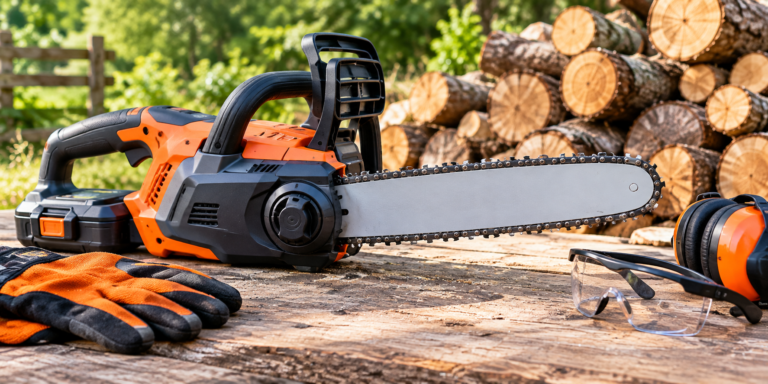
Cordless chainsaws have come a long way in a short time. Once dismissed as underpowered toys next to their gas-powered cousins, today’s battery models are genuinely capable tools — instant startup, zero exhaust emissions, and a fraction of the maintenance headaches. Whether you’re pruning trees, clearing storm debris, or cutting firewood, this guide answers the questions people ask most before buying or using one.
Performance & Buying Choices
How do battery-powered chainsaws compare to gas-powered models?
The differences show up in three main areas:
Startup and operation. A battery chainsaw starts the moment you pull the trigger. There’s no fuel mixing, no choke adjustments, no yanking a pull-cord repeatedly on a cold morning. Gas chainsaws demand all of that just to get running, every single time.
Noise and emissions. Cordless models run significantly quieter — roughly 90 decibels compared to a gas saw’s 105–110 decibels — and produce zero exhaust fumes, which matters if you’re working in an enclosed area or just don’t want to breathe two-stroke exhaust all afternoon.
Maintenance. Battery saws skip an entire category of upkeep: no spark plugs to replace, no air filters to clean, no fuel stabilizer needed for storage. That said, gas chainsaws still hold one real advantage — for professional, high-volume timber work, there’s no battery to recharge mid-job, which matters when you’re cutting for hours on end without a break.
Is a 20V or 40V chainsaw better?
Neither is universally “better” — they’re built for different jobs:
- 20V models are lighter and easier to maneuver, making them the better choice for overhead pruning and light yard maintenance where control matters more than raw power.
- 40V models (and higher) deliver noticeably more torque and faster chain speed, giving you the muscle needed to get through thicker logs and denser hardwoods without bogging down.
Think of it less as “which is better” and more as “which matches what I’m actually cutting.”
What size guide bar do I need?
A simple rule of thumb: your guide bar should be about 2 inches longer than the maximum diameter of the wood you cut most often. From there:
- 10–12 inches: Best for pruning limbs and clearing small branches
- 14–16 inches: Suited to general property upkeep, felling small trees, and bucking firewood
- 18+ inches: Built for larger logs and heavier property-clearing work
Battery Life & Runtime
How long will a cordless chainsaw run on a single charge?
Most models deliver somewhere between 30 and 60 minutes of active cutting time per charge. The actual number depends heavily on two things: the battery’s capacity (measured in amp-hours, or Ah) and how dense the wood you’re cutting is — harder wood draws more power and shortens runtime. Brushless motors help stretch this further, since they run more efficiently than older brushed designs.
Do I need to buy the battery and charger separately?
That depends on which configuration you buy:
- Chainsaw kits come bundled with the tool, a battery, and a matching charger, so you’re ready to work right out of the box.
- Tool-only options skip the battery and charger entirely — a smart choice if you already own compatible batteries from the same brand’s tool platform, since it saves you from paying for redundant batteries you don’t need.
Maintenance & Troubleshooting
Do electric chainsaws require bar and chain oil?
Yes — this trips up a lot of first-time buyers who assume “electric” means “no fluids needed.” All chainsaws, corded or cordless, need dedicated bar and chain oil to lubricate the point where the guide bar meets the moving chain. Skip it, and friction builds heat fast enough to damage both the bar and the chain. Most modern cordless saws include an automatic oiler that handles this continuously while the saw runs, so it’s largely hands-off once set up correctly.
Why does my new chainsaw chain keep slipping off?
This is almost always due to normal chain stretching, not a defect:
The cause: Brand-new chains go through thermal expansion and settle structurally during their first 20 minutes or so of real use, which causes them to loosen slightly.
The fix: Power the saw down, remove the battery, and put on safety gloves before touching anything. Check and re-tighten the chain tension every 5 to 10 minutes during that first work session. Once the chain has been through this break-in period, it should hold tension normally going forward.
Feature Comparison at a Glance
| Feature | Light Duty (20V) | Heavy Duty (40V–80V) |
|---|---|---|
| Typical Bar Length | 12″ or smaller | 14″ to 18″+ |
| Average Weight | 5–8 lbs | 9–14 lbs |
| Best Uses | Pruning limbs, light yard cleanup | Firewood cutting, small tree felling |
| Power Comparison | Similar to small gas trim-saws | Comparable to 30cc–40cc+ gas engines |
The Bottom Line
Cordless chainsaws have closed most of the gap with gas models for typical homeowner use — pruning, storm cleanup, and moderate firewood cutting are all well within their capability, with far less hassle and noise. Where gas still wins is sustained, high-volume professional logging, where battery downtime becomes a real bottleneck.
