

Skin irritation from clothing is one of those problems people just live with instead of actually solving, mostly because they assume it’s normal or unavoidable. It’s not. Most chafing and irritation around the waistband and thigh area comes down to a small handful of causes, and once you know what they are, the fix is usually pretty straightforward.
What’s Actually Causing It
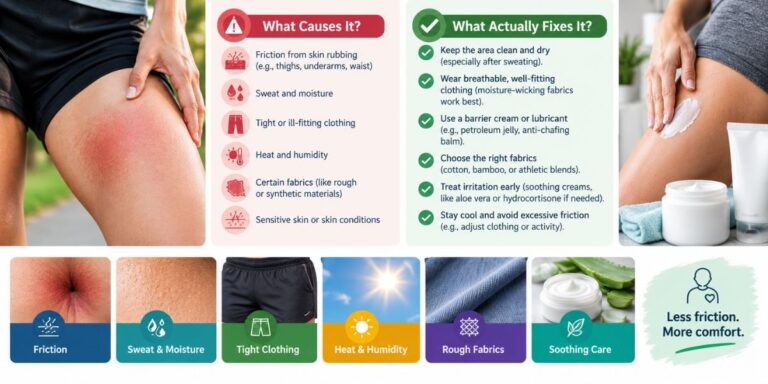
Friction is the biggest culprit. Anywhere fabric rubs repeatedly against skin — waistbands, seams, thigh areas — you get irritation over time, and it gets worse the more movement and repeated contact there is throughout the day.
Excessive sweating makes friction worse, not better. Moisture trapped against skin softens it slightly and increases resistance against fabric, which means more rubbing, more heat, and a higher chance of actual chafing rather than just mild discomfort.
Heat retention plays a bigger role than people realize, especially for plus-size bodies, where there’s naturally more skin-to-skin and skin-to-fabric contact. More contact area means more trapped heat, and heat combined with moisture is basically the perfect setup for irritation and, eventually, bacterial or fungal issues if it goes unaddressed.
Fabric and seam design matter more than most people give them credit for. Bulky seams, rough synthetic fabric, and elastic that digs in rather than sitting flat all directly contribute to skin breakdown over repeated wear — it’s not just about how the garment fits, but how it’s actually constructed.
Allergic reactions or sensitivities to certain fabric treatments or synthetic materials can also mimic or worsen irritation that started as simple friction, especially with cheaper garments that use rougher synthetic blends or harsh dyes.
How to Actually Fix It
Switch to seamless underwear. This addresses the root friction problem directly — without a seam digging into skin at the waistband or leg opening, there’s simply less repeated rubbing happening in the first place. It’s less a “nice to have” and more a direct fix for the mechanical cause of chafing.
Look for breathable, lightweight fabric. Materials that let air circulate reduce the heat and moisture buildup that make friction worse. This matters more the more skin contact and heat retention someone naturally deals with, which is exactly why it’s worth prioritizing rather than treating as a minor feature.
Choose hypoallergenic materials. If sensitivity or allergic reaction is part of what’s going on, a hypoallergenic fabric removes one whole category of the problem, rather than just easing the friction side of it.
Go for antimicrobial fabric when you can find it. Beyond comfort, this helps control odor and adds a layer of cleanliness that supports overall skin health — useful for anyone dealing with sweat-related irritation, since it’s addressing the bacterial side of the equation, not just the mechanical one.
Don’t rely only on topical products. Creams and powders can soothe irritation after it’s already happened, but they don’t fix a garment that’s mechanically causing the problem day after day. If you’re constantly treating the same irritated area, the underlying cause is very likely the underwear itself, not something a cream alone will resolve.
The Bigger Picture
Preventing this kind of skin issue isn’t really about finding the perfect lotion or powder — it’s about removing the actual source of friction and moisture buildup in the first place. For a lot of people, that comes down to a fairly simple swap: seamless, breathable, hypoallergenic underwear instead of whatever’s been causing the problem without them realizing it. It’s a small change, but it directly targets the mechanical cause rather than just managing the symptoms after the fact.
