

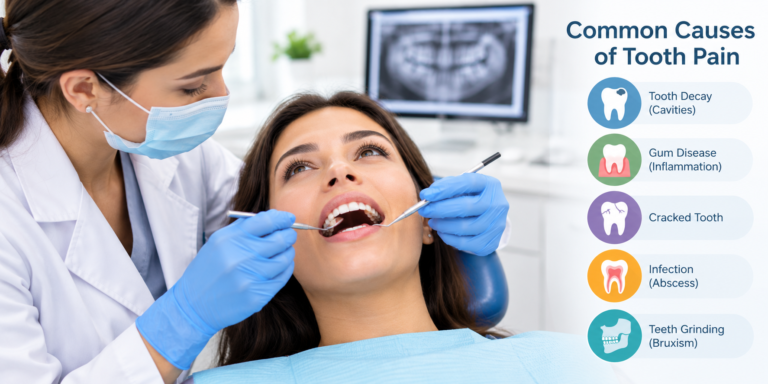
Tooth pain has a way of taking over your whole day. You try to eat on one side, sip something cold and regret it, then start wondering whether this is a small problem or the start of something expensive and urgent. That stress is real. Pain in your mouth can feel confusing because the spot that hurts is not always the spot causing the trouble, which is why seeing a local dentist in Sugar Land can help identify the real cause quickly.
A family dentist looks for patterns before jumping to treatment. The goal is to find the true source of pain, whether that is decay, a cracked tooth, gum irritation, sinus pressure, grinding, or a problem with an old filling. How Family Dentists Diagnose The Source Of Tooth Pain comes down to a careful exam, a clear history of your symptoms, and the right imaging or testing when needed.
Family dentists trace tooth pain by matching symptoms to causes
You may only know that your tooth hurts. Your dentist wants more detail because pain leaves clues. Sharp pain when you bite points in one direction. Lingering pain after hot or cold points in another. A dull ache near the jaw can suggest clenching or grinding. Swelling, a bad taste, or pain that wakes you up can signal infection.
This is where a family dentist tooth pain diagnosis starts. You will usually be asked when the pain began, what triggers it, whether it comes and goes, and whether it spreads into your ear, jaw, or head. If you have ever thought, “I cannot even tell which tooth it is,” that is common. Nerves in the mouth can blur the picture.
Then comes the exam. A dentist checks the teeth, gums, bite, and existing dental work. They may tap on a tooth, test temperature response, or have you bite on a small tool to see whether pressure causes pain. These simple tests often reveal a lot. A cracked tooth may hurt only when you release pressure. Deep decay may react strongly to cold. Gum disease may show up as tenderness, bleeding, or loose teeth.
If the cause is not obvious, X-rays help show what the eye cannot. They can reveal decay between teeth, infection near the root, bone loss, impacted teeth, and failing restorations. In some cases, the pain is not dental at all. Sinus pressure in the upper back teeth, jaw joint strain, or nerve pain can mimic a toothache. That is why a good tooth pain diagnosis is about ruling things out as much as confirming them.
Untreated tooth pain often gets worse, not quieter
A lot of people wait because the pain fades for a day or two. That can be misleading. A cavity does not heal on its own. According to the National Institute of Dental and Craniofacial Research on tooth decay, untreated decay can move deeper into the tooth and lead to infection, pain, and tooth loss.
You see this in real life all the time. A person feels a quick sting with ice water, shrugs it off, then weeks later cannot chew on that side. Someone else thinks the pain is from a popcorn hull in the gum, but the real issue is a cracked filling that has let bacteria in. The longer the source stays hidden, the more likely the fix shifts from a small filling to a root canal or extraction.
There is also the practical side. Pain affects sleep, work, meals, and mood. It can make you short tempered, distracted, and tired. If there is swelling or fever, the problem may be moving beyond the tooth and needs prompt care. MedlinePlus explains common causes of toothache and warning signs, including when pain may signal infection or injury that should not wait.
At home relief and professional diagnosis are not the same thing
Home care can help you get through the day, but it cannot tell you why the pain is happening. That difference matters.
| Approach | What It Can Do | What It Cannot Do | Common Risk |
| Rinsing with warm salt water | Soothe irritated gums and help clean the area | Detect decay, cracks, or infection under the tooth | Delays care if pain keeps returning |
| Over the counter pain medicine | Reduce pain and swelling for a short time | Fix the source of the problem | Masking symptoms while the condition worsens |
| Avoiding hot, cold, or hard foods | Lower irritation during meals | Show whether the pulp, root, or bite is involved | False sense that the issue is improving |
| Professional dental exam | Identify the cause through testing and imaging | Promise a single treatment before diagnosis | Very low risk compared with waiting on infection |
That is the difference between guessing and knowing. A family dental visit is not only about pain relief. It is about finding the exact tooth, tissue, or bite problem behind the pain, then choosing the least invasive fix that actually works.
Three steps help you respond to tooth pain right away
1. Track the pain before your appointment. Write down when it started, what triggers it, how long it lasts, and whether heat, cold, sweets, or biting make it worse. Notice swelling, bad taste, fever, or pain that spreads. These details help with an accurate oral pain evaluation.
2. Protect the area without testing it. Eat soft foods, avoid extreme temperatures, and keep the area clean with gentle brushing and flossing. Good daily care supports your mouth even when it hurts. The NIDCR oral hygiene guide covers simple habits that lower irritation and help prevent future problems.
3. Schedule a dental exam before the pain changes. Pain that comes and goes is still pain. If you wait for it to become constant, the treatment may become more involved. If you have swelling, fever, trauma, or severe pain, seek prompt dental care.
Clear answers usually start with a careful dental exam
Tooth pain can make you feel stuck because you cannot see the problem yourself, and internet guesses rarely match what is happening inside the tooth. A family dentist narrows it down through symptoms, testing, and imaging, then matches the cause to the right treatment. That is how pain goes from vague and stressful to specific and manageable.
You do not need to figure it out alone. If tooth pain is interfering with eating, sleeping, or getting through the day, schedule a visit with a family dentist and get a real diagnosis before a small problem turns into a bigger one.
