

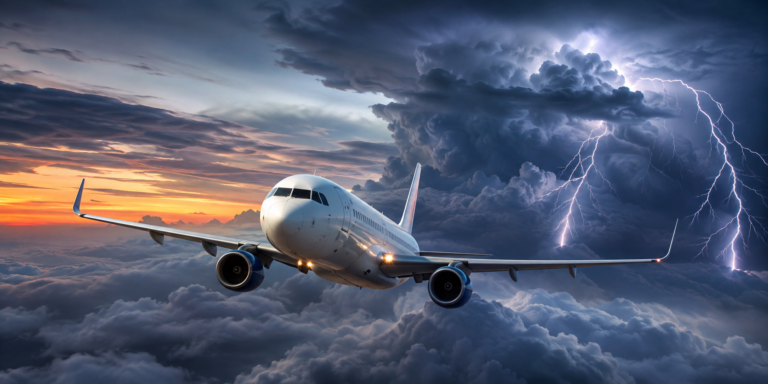
Seeing dark clouds, lightning, and heavy rain outside an airplane window can make even an experienced traveler wonder: Is it safe to fly through a storm?
The short answer is that commercial aircraft are designed and operated to handle a wide range of weather conditions, but pilots generally avoid flying directly through thunderstorms whenever possible. Thunderstorms can produce severe turbulence, hail, lightning, strong updrafts and downdrafts, wind shear, icing, and extremely heavy precipitation. The Federal Aviation Administration (FAA) specifically advises pilots to avoid thunderstorms rather than attempt to penetrate them.
That does not mean every flight near a storm is dangerous. Modern aircraft, weather radar, air-traffic control systems, and careful flight planning allow airlines to route around many areas of severe weather.
Quick Answer: Can Planes Fly Through Storms?
Technically, aircraft can encounter storms, but pilots try not to fly directly through severe thunderstorms.
Airlines and flight crews use weather radar, forecasts, reports from other aircraft, and information from air-traffic controllers to identify hazardous areas and choose safer routes. Sometimes a flight may be delayed, diverted, or rerouted when storms make the planned route unsuitable.
The FAA recommends maintaining significant distance from thunderstorms. Its guidance says severe turbulence can occur up to about 20 miles from severe thunderstorms, which is one reason pilots do not simply aim for a visible gap in a storm cloud.
Why Are Thunderstorms Dangerous for Airplanes?
A thunderstorm is much more than rain and lightning. Inside and around a mature storm, several dangerous weather conditions can occur simultaneously.
1. Severe Turbulence
Turbulence is one of the biggest concerns when flying near thunderstorms.
Thunderstorms contain powerful rising and descending air currents. These updrafts and downdrafts can produce sudden changes in altitude, airspeed, and aircraft movement. The FAA notes that turbulence within and around thunderstorms can range from moderate to extreme.
For passengers, this can mean sudden drops or violent shaking. That is why keeping your seat belt fastened whenever you are seated is one of the simplest ways to reduce the risk of injury.
2. Hail
Hail can be especially dangerous because it may exist outside the most obvious part of a storm.
Large hailstones can damage an aircraft’s windshield, nose, wings, engines, and other components. The FAA warns that hail may be encountered several miles away from a thunderstorm, including in areas that do not look particularly threatening from the cockpit.
This is another reason pilots don’t simply fly underneath or around the visible edge of a storm without carefully evaluating the weather.
3. Lightning
Lightning looks frightening from a passenger’s seat, but it is not normally the biggest danger associated with thunderstorms.
Modern aircraft are designed with lightning protection, and FAA aircraft-design requirements require airplanes to withstand lightning strikes and continue a safe flight and landing.
A lightning strike can still be startling and may require inspection after landing, but the greater concern is usually the combination of turbulence, hail, wind shear, and other hazards associated with the storm.
4. Wind Shear and Microbursts
Thunderstorms can produce sudden changes in wind speed and direction.
These conditions can be particularly dangerous during takeoff and landing because an aircraft may suddenly experience a change in its airflow and performance. The FAA identifies wind shear and microbursts as significant thunderstorm hazards.
When severe storms are near an airport, flights may therefore be held, delayed, diverted, or sent to another runway depending on conditions.
5. Heavy Rain and Reduced Visibility
A thunderstorm can produce extremely heavy precipitation, reducing visibility and affecting aircraft operations.
Heavy rainfall is also associated with stronger turbulence around convective activity. FAA guidance notes that precipitation intensity can provide an indication of increasing turbulence, although weather radar itself does not directly detect turbulence.
6. Icing
Thunderstorms can also contain conditions favorable for rapid icing.
Ice accumulating on aircraft surfaces can affect aerodynamic performance. This is particularly concerning when combined with strong vertical air movements inside a storm. The FAA lists icing among the hazards associated with thunderstorms.
Do Passenger Planes Ever Fly Near Storms?
Yes.
A plane can safely fly near a storm while maintaining an appropriate separation distance. In fact, passengers may sometimes see huge storm clouds outside the window even though the aircraft is following a carefully planned route around them.
The important distinction is between flying near a storm and deliberately penetrating a severe thunderstorm.
Commercial flight crews have access to sophisticated weather information and can coordinate with air-traffic control when they need to deviate from their planned route.
The FAA says pilots may request course deviations to avoid weather, while controllers can provide relevant weather information and assist with avoidance when possible.
What Happens If a Storm Is Directly on the Flight Path?
If severe weather blocks the planned route, several things can happen.
The flight may be rerouted
Pilots can request a deviation around the storm. Air-traffic control may provide an alternative heading or route when available.
The flight may be delayed
If a storm is affecting the departure airport or destination, the aircraft may remain on the ground until conditions improve.
The aircraft may enter a holding pattern
Sometimes an aircraft can remain in a safe area while waiting for weather conditions to change.
The aircraft may divert
If conditions near the destination become unsuitable, the crew may choose another airport.
The flight may be canceled
In particularly severe conditions, cancellation may be the safest option.
These decisions are normal parts of aviation weather management and do not necessarily mean that the aircraft itself is incapable of flying in bad weather.
Is Turbulence Dangerous for Passengers?
Turbulence can certainly cause injuries, particularly when passengers are not wearing seat belts.
However, experiencing turbulence does not automatically mean an airplane is in danger of crashing. Commercial aircraft are designed and tested to withstand significant aerodynamic forces, and flight crews receive extensive training in managing turbulence.
The main practical concern for passengers is being thrown from their seats or struck by objects when unexpected turbulence occurs.
The safest habit is simple: keep your seat belt fastened whenever you are seated, even when the seat-belt sign is off.
Can an Airplane Fly Above a Thunderstorm?
Sometimes an aircraft may be able to fly above certain weather systems, but flying higher is not a universal solution.
Large thunderstorms can grow to extremely high altitudes, and their dangerous air movements may extend well beyond the visible cloud. The FAA specifically warns pilots not to assume that simply going above or underneath a thunderstorm eliminates the danger.
For this reason, pilots evaluate the entire weather system rather than relying solely on the height of the aircraft.
What About Flying Through Light Rain?
Light rain is very different from penetrating a severe thunderstorm.
Airliners routinely operate in rain and other ordinary weather conditions. Rain alone does not mean a flight is unsafe.
The concern increases when rain is associated with thunderstorms, severe turbulence, hail, strong winds, wind shear, icing, or other hazardous conditions.
In other words, seeing rain outside your airplane window does not mean the aircraft is flying through a dangerous storm.
How Pilots Know Where Storms Are
Pilots and airline operations teams use multiple sources of weather information.
These can include:
- Weather forecasts
- Ground-based weather radar
- Airborne weather radar
- Reports from other aircraft
- Air-traffic-control information
- Airport weather observations
- Satellite and other meteorological information
Airborne weather radar is particularly useful for identifying areas of precipitation associated with thunderstorms. However, radar does not directly show turbulence, so pilots must interpret the information carefully.
This is why pilots don’t simply look at a radar screen and choose the shortest route through a storm.
Why Doesn’t the Pilot Just Fly Through a Gap?
A gap between two storm cells can look safe from a distance, but conditions can change rapidly.
Thunderstorms can grow, move, and merge. The visible cloud is also not necessarily the complete extent of the hazardous weather.
FAA guidance warns that severe turbulence can extend well beyond the visible thunderstorm, and pilots are advised to leave substantial separation from severe storms.
Therefore, a route that appears to have a narrow opening may not actually provide a safe passage.
What Should Passengers Do During a Storm?
Passengers don’t need to make aviation decisions themselves. The flight crew and airline operations team handle weather avoidance.
You can, however, take a few simple precautions:
- Keep your seat belt fastened while seated.
- Follow cabin-crew instructions.
- Keep loose objects secured.
- Avoid standing or walking around during significant turbulence.
- Remain calm if the aircraft changes altitude or route.
A sudden route change is often a sign that the crew is actively avoiding hazardous weather rather than heading toward it.
What If Lightning Strikes the Plane?
It can happen.
Aircraft can be struck by lightning, sometimes without passengers noticing anything more than a bright flash or loud bang. Modern aircraft are engineered with lightning protection, and aviation regulations require protection that allows the airplane to continue a safe flight and landing.
After a suspected lightning strike, appropriate inspection and maintenance procedures can be followed.
So, while lightning is understandably alarming, a lightning strike does not automatically mean an airplane is in immediate danger.
Is It Safer to Delay a Flight During a Major Storm?
If severe thunderstorms are expected along the route, delaying or changing the flight can be the safest decision.
The FAA’s current thunderstorm guidance emphasizes avoidance and recommends diverting or waiting on the ground when a storm area cannot be safely navigated around.
This is one reason departure times can change unexpectedly during severe weather. The delay may be frustrating, but it is part of the safety system.
The Bottom Line
So, is it safe to fly through a storm?
Flying through an ordinary area of rain is not the same as deliberately flying through a severe thunderstorm. Modern passenger aircraft are highly capable and built with systems designed to handle many weather-related challenges, but pilots generally avoid penetrating thunderstorms because the combination of turbulence, hail, lightning, wind shear, icing, heavy rain, and powerful updrafts and downdrafts can be hazardous.
If a storm develops along the route, the crew can work with airline dispatchers and air-traffic control to find a safer alternative. The aircraft may deviate, hold, delay departure, or divert to another airport.
For passengers, the best approach is simple: trust the crew, follow instructions, and keep your seat belt fastened whenever you’re seated.
Stormy skies may look dramatic from an airplane window, but aviation safety procedures are specifically designed to keep aircraft away from the most dangerous parts of severe weather.
