

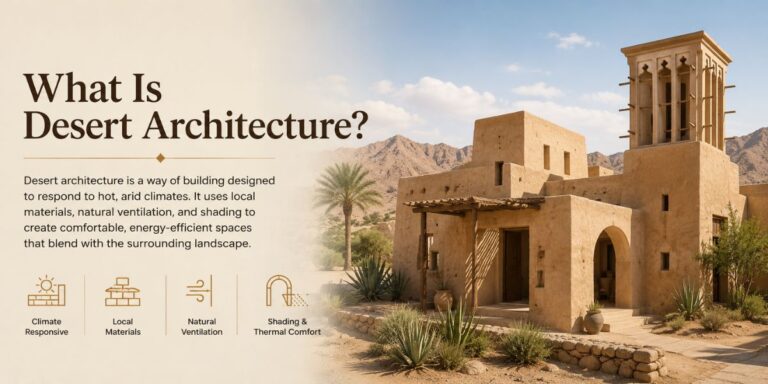
If you’ve ever walked into a home in the middle of a scorching summer and noticed it stayed surprisingly cool without the air conditioner running nonstop, you’ve probably experienced desert architecture in action. Many homeowners assume surviving extreme heat simply means installing a larger HVAC system, but smart building design often has a much bigger impact. Understanding what is desert architecture can help homeowners reduce energy costs, improve indoor comfort, and build homes that naturally work with the climate instead of fighting against it.
Whether you’re planning a new build, renovating a property in an arid region, or simply curious about climate-responsive design, this guide explains how desert architecture works and why its principles are becoming increasingly relevant around the world.
Quick Answer
Desert architecture is a style of building designed specifically for hot, dry climates. It focuses on reducing heat gain, maximizing natural ventilation, providing shade, and using materials with high thermal mass that absorb heat during the day and release it slowly at night. Rather than relying heavily on mechanical cooling, desert architecture helps buildings remain comfortable through thoughtful design and climate adaptation.
What Is Desert Architecture?
Desert architecture is the practice of designing buildings that respond to the challenges of arid environments, where temperatures may exceed 100°F (38°C) during the day before dropping significantly at night.
Instead of viewing the climate as an obstacle, architects use it as the foundation of the design process.
Key goals include:
- Keeping indoor temperatures comfortable
- Reducing cooling costs
- Conserving water
- Protecting occupants from intense sunlight
- Increasing long-term durability
Modern desert architecture combines centuries-old building techniques with today’s energy-efficient construction methods, insulation systems, and sustainable materials.
Why Desert Architecture Matters Today
Climate change has increased interest in passive cooling strategies even outside traditional desert regions.
Many homeowners now face:
- Higher electricity bills
- Longer heat waves
- Increased demand on HVAC systems
- Water shortages
- Greater concern about sustainable construction
The design principles behind desert architecture help address these problems while improving comfort year-round.
Key Features of Desert Architecture
Thick Walls with High Thermal Mass
One of the defining characteristics is the use of materials that store heat rather than allowing it to pass quickly into the home.
Common materials include:
- Adobe
- Rammed earth
- Stone
- Concrete
- Brick
These materials absorb daytime heat and slowly release it after sunset when outdoor temperatures become cooler.
This process reduces indoor temperature swings and decreases the workload on HVAC equipment.
Small, Carefully Positioned Windows
Large glass walls may look beautiful, but they allow enormous amounts of solar heat into a building.
Desert homes often use:
- Smaller windows
- Recessed window openings
- Double or triple glazing
- Low-E glass
- Strategic window placement
South-facing windows may be shaded while north-facing windows provide softer daylight.
Deep Roof Overhangs and Shade
Shade is one of the most valuable design tools in hot climates.
Architects often incorporate:
- Covered patios
- Verandas
- Pergolas
- Deep eaves
- Exterior screens
These features prevent direct sunlight from striking walls and windows during the hottest hours.
Natural Ventilation
Proper airflow reduces dependence on air conditioning.
Design strategies include:
- Cross ventilation
- High ceilings
- Clerestory windows
- Courtyards
- Roof vents
Warm air naturally rises, allowing cooler air to circulate throughout the building.
Courtyard Design
Many traditional desert homes are organized around an interior courtyard.
Benefits include:
- Natural cooling
- Privacy
- Protected outdoor living
- Improved airflow
- Additional shade
Plants and small water features can further reduce temperatures through evaporative cooling.
Light-Colored Exterior Finishes
Dark surfaces absorb sunlight.
Light-colored finishes reflect more solar radiation.
Common finishes include:
- White stucco
- Sand-colored plaster
- Limestone
- Reflective roofing materials
This simple design decision can noticeably reduce heat absorption.
Common Materials Used in Desert Architecture
Choosing the right materials is essential because every building component influences heat transfer.
| Material | Benefits |
|---|---|
| Adobe | Excellent thermal mass |
| Rammed Earth | Durable and naturally insulating |
| Concrete | Strong structural support with thermal storage |
| Stone | Long-lasting and heat resistant |
| Clay Brick | Stable indoor temperatures |
| Stucco | Reflects sunlight and protects walls |
| Insulated Roofing Systems | Reduce attic heat gain |
| Low-E Glass | Limits solar heat entering windows |
Modern homes often combine traditional materials with advanced insulation, vapor barriers, and energy-efficient framing techniques.
Benefits of Desert Architecture
Lower Energy Bills
Passive cooling reduces reliance on air conditioning.
Many homeowners notice lower summer electricity consumption after incorporating passive design strategies.
Greater Indoor Comfort
Instead of dramatic indoor temperature fluctuations, well-designed desert homes remain consistently comfortable throughout the day.
Longer Building Lifespan
Proper shading protects:
- Roofing
- Exterior paint
- Windows
- Drywall
- Flooring
Reduced exposure to heat and UV radiation can slow material deterioration.
Better Sustainability
Desert architecture typically requires:
- Less energy
- Less water
- Fewer mechanical systems
- More locally sourced materials
This lowers both operating costs and environmental impact.
Improved Resilience
Buildings designed specifically for harsh climates generally perform better during power outages because they rely less on mechanical cooling.
Potential Drawbacks
Although highly effective, desert architecture isn’t perfect.
Possible limitations include:
Higher Initial Construction Costs
Specialized materials and custom design features may increase upfront expenses.
Requires Careful Planning
Window orientation, roof design, insulation, and structural support must all work together.
Poor planning can reduce performance significantly.
Climate Specific
Some features designed for desert regions may not perform well in humid or cold climates.
Cost Breakdown
Construction costs vary depending on location, labor rates, building codes, permit requirements, and material availability.
General estimates include:
| Project | Typical Cost Range |
|---|---|
| Passive shading upgrades | $500–$5,000 |
| Energy-efficient window replacement | $400–$1,500 per window |
| Exterior insulation improvements | $2,000–$10,000+ |
| Courtyard construction | $5,000–$30,000+ |
| Custom desert home construction | Varies widely based on design and location |
Premium materials like rammed earth or custom adobe walls generally cost more than conventional wood framing, but they may reduce long-term energy expenses.
Desert Architecture vs Traditional Home Design
| Feature | Desert Architecture | Traditional Design |
|---|---|---|
| Cooling Strategy | Passive cooling | Mechanical HVAC |
| Wall Materials | High thermal mass | Wood framing and drywall |
| Window Size | Smaller and shaded | Often larger |
| Roof Design | Reflective with overhangs | Varies |
| Energy Use | Lower | Higher in hot climates |
| Water Efficiency | Often integrated | Less emphasis |
DIY Improvements Inspired by Desert Architecture
You don’t need to build a new house to benefit from these ideas.
Skill Level
Beginner to Intermediate
Tools Required
- Ladder
- Drill
- Measuring tape
- Circular saw (for pergolas)
- Safety glasses
- Gloves
Estimated Time
One afternoon to several weekends depending on the project.
Projects to Consider
- Install exterior shade screens
- Add reflective roof coatings
- Plant drought-tolerant landscaping
- Install pergolas
- Upgrade attic insulation
- Replace inefficient windows
- Add weatherstripping around doors
Safety Precautions
- Follow ladder safety.
- Turn off electrical circuits when working near wiring.
- Wear eye protection when cutting materials.
- Check local building codes before structural modifications.
Common DIY Errors
- Ignoring roof ventilation
- Blocking natural airflow
- Installing dark roofing materials
- Using indoor-rated materials outdoors
- Forgetting permit requirements for structural additions
Building Codes and Permit Considerations
While passive design itself usually doesn’t require special approval, many improvements may require permits.
Examples include:
- Structural framing changes
- Roof modifications
- Foundation work
- Load-bearing wall removal
- Electrical upgrades
- HVAC alterations
Always verify local building code requirements before beginning major renovations.
Maintenance Tips
Desert environments create unique maintenance challenges.
Regularly inspect:
- Roof coatings
- Exterior stucco
- Sealants around windows
- Expansion joints
- Irrigation systems
- HVAC filters
- Foundation for settlement cracks
Dust accumulation is another common issue, making routine cleaning especially important.
Expert Recommendations
After working around residential renovation projects in hot climates, I’ve found that homeowners often focus on bigger air conditioners before addressing the building envelope. In many cases, improving insulation, reducing solar heat gain, and enhancing ventilation delivers better long-term results at a lower operating cost.
If you’re planning a remodel, start with the home’s shell—roofing, insulation, windows, and shading—before investing in larger HVAC equipment. A well-designed envelope allows your heating and cooling system to work more efficiently.
For homeowners exploring other climate-responsive building styles and construction advice, our guide to sustainable home design principles provides additional practical ideas that complement desert architecture.
For authoritative information on energy-efficient home construction and passive cooling strategies, the U.S. Department of Energy Energy Saver Guide offers reliable guidance for homeowners.
Conclusion
Understanding what is desert architecture goes far beyond recognizing a particular architectural style. It’s about designing homes that respond intelligently to their environment through passive cooling, thermal mass, natural ventilation, strategic shading, and efficient use of resources.
Whether you’re building a custom home in an arid region or upgrading an existing property, applying even a few desert architecture principles can improve comfort, lower utility bills, and reduce long-term maintenance. The most successful homes aren’t those with the biggest cooling systems—they’re the ones designed to stay comfortable naturally.
Frequently Asked Questions
Is desert architecture only used in deserts?
No. Many of its passive cooling techniques are also effective in other regions that experience long, hot summers.
What materials work best for desert homes?
Adobe, rammed earth, concrete, stone, clay brick, insulated roofing systems, and low-E glass are commonly used because they reduce heat transfer and improve energy efficiency.
Does desert architecture eliminate the need for air conditioning?
Not always. In extremely hot climates, air conditioning is still common, but good design can significantly reduce how often and how hard the system needs to operate.
Why are windows smaller in desert homes?
Smaller, shaded windows reduce solar heat gain while still allowing natural daylight into the building.
Is desert architecture expensive?
Initial construction costs may be higher depending on the materials and design, but many homeowners recover part of that investment through lower energy bills over time.
Can I incorporate desert architecture into an existing home?
Yes. Adding shade structures, upgrading insulation, installing energy-efficient windows, improving ventilation, and using reflective roofing materials are practical upgrades inspired by desert architecture.
Is desert architecture environmentally friendly?
Generally, yes. It emphasizes passive cooling, lower energy consumption, water conservation, and durable materials, making it one of the more sustainable approaches to residential design.
Meta Description
What is desert architecture? Learn how this climate-smart building style uses passive cooling, thermal mass, shading, and natural ventilation to create energy-efficient homes.
