

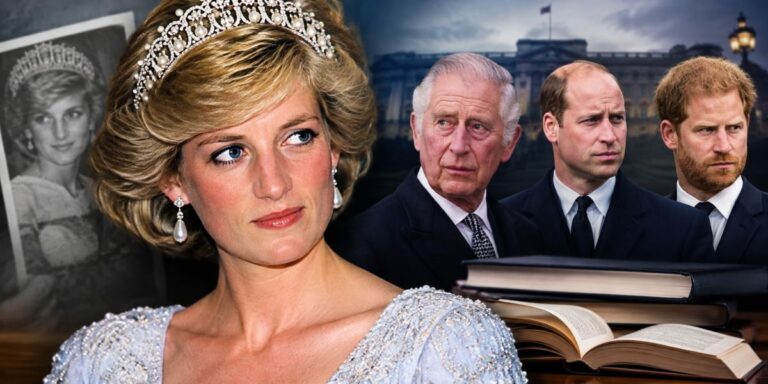
Nearly three decades after Princess Diana’s death, a new memoir from her brother Earl Spencer has managed to do something remarkable: reignite a controversy that the Royal Family has spent thirty years trying to move past. Buckingham Palace’s unusually sharp public rebuttal to the book’s claims about King Charles’s reaction to Diana’s death shows just how raw this history still is, even after all this time.
Why the Summer of 1997 Still Matters
The late summer of 1997 was arguably the most precarious moment in the modern monarchy’s public standing. As mourners piled flowers outside the palace gates in an outpouring of collective grief, the Royal Family appeared distant and emotionally out of step with the public mood — a real threat to their support at the time. Royal author Valentine Low, who was present that period, has described the atmosphere as genuinely unpredictable, with the strength of public anger toward the palace catching almost everyone off guard.
Low was actually inside Westminster Abbey during Diana’s funeral, and he’s recalled a striking moment during Earl Spencer’s now-famous eulogy: the sound of applause from the enormous crowd outside, listening on loudspeakers, somehow carrying through the Abbey’s stone walls and prompting the mourners inside — including Charles and the rest of the Royal Family — to begin applauding too. It’s a moment that’s stuck with him precisely because of how extraordinary and unexpected it was in that setting.
The public mood eventually forced the late Queen Elizabeth II to break from tradition and deliver a live televised tribute to Diana, acknowledging how difficult grief can be to express and the mix of emotions — disbelief, confusion, even anger — that often follow a sudden loss. That intervention, reportedly encouraged in part by newly elected Prime Minister Tony Blair as a modernizing gesture, was later dramatized in the film The Queen.
How This Traces Directly Into Today’s Royal Tensions
A lot of the friction still playing out in the royal family today has roots in the trauma of that period. Losing a mother at such a young age inevitably shaped both princes profoundly, and that influence is still visible in how the family dynamics have unfolded since.
Prince Harry’s memoir Spare made that especially clear — Diana’s absence looms large throughout the book, and Harry has written vividly about the distress of walking behind his mother’s coffin as a child, including recounting Earl Spencer’s strong objection to the princes being made to do so at all. Harry’s broader argument — that the interests of the monarchy as an institution were placed above the wellbeing of the people within it — has become a central thread in his decision to step back from royal duties and in his ongoing rift with his brother, Prince William.
What Earl Spencer’s New Book Actually Claims
Spencer’s memoir, Swan Song: Diana, My Sister, revives long-simmering disputes both within the royal family and between in-laws, and it’s reopened uncomfortable questions about King Charles’s character, how he treated Diana during their marriage, and his relationship with Queen Camilla.
The most explosive claim centers on a phone conversation Spencer says he had with the then-Prince Charles shortly after Diana’s death, in which Charles is alleged to have said: “We’ll forget her soon enough.” Spencer has also described Charles as sounding almost giddy or elated on that call, comparing his tone to someone who’d just won the lottery.
Buckingham Palace’s response was polite in tone but firm in substance, essentially disputing that the conversation happened the way Spencer describes it. The palace’s language suggested that grief experienced within a family can distort memory and perception in ways that aren’t always obvious to the person experiencing it.
What Experts Say About Memory and Grief
Psychotherapist Nick Hatter has weighed in without taking a side on who’s telling the truth, noting instead that memories formed during traumatic events can genuinely become distorted over time. He’s pointed out that a phone call in particular strips away visual cues and body language that would normally help someone interpret tone and intent accurately. Hatter has also flagged something called “bereavement mania” — a real, if less commonly discussed, grief response where a person can appear inappropriately hyper or even euphoric after a loss, which complicates any confident reading of how someone “should” have sounded in that moment.
The Public Is Split
A YouGov poll taken after the book’s claims went public found opinion genuinely divided: roughly a third believed Earl Spencer’s account, just over a third suspected it wasn’t accurate, and the remaining third said they simply didn’t know. Low doesn’t expect the book to shift many opinions regardless, suggesting that people’s views on Charles and the Diana years were largely settled long before this memoir arrived — and that some may see raking up these claims decades later as somewhat distasteful.
Reactions From Royal Commentators Are Mixed
The response from royal watchers has ranged from sympathetic to sharply critical. One commentator described the book as an unusually hostile and unflattering portrayal of Charles, while acknowledging it ultimately reflects Spencer’s own memory and perspective rather than an objective record. Historian Sir Anthony Seldon has taken a harder line, calling the memoir an unnecessary and regrettable publication despite crediting Spencer’s genuine courage at the time of Diana’s funeral.
Other commentators worry about the timing specifically. With the 30th anniversary of Diana’s death approaching next year, there’s real concern that this controversy could undo years of careful work rehabilitating Charles and Camilla’s public image. Veteran broadcaster David Dimbleby, who anchored the BBC’s original coverage of Diana’s funeral, has openly questioned why Spencer chose to release these claims now rather than years ago, expressing hope that public appetite for this kind of recurring royal gossip cycle will eventually fade in favor of more substantive questions about the monarchy’s future role.
Spencer Is Standing Firmly Behind His Account
Ahead of the book’s release, Earl Spencer explained that repeated requests for interviews about his sister, combined with the approaching anniversary, pushed him to finally put his own memories in writing rather than continuing to read other people’s versions of events — some of which, in his view, have hardened into accepted fact despite being inaccurate. In a weekend interview with the BBC’s Laura Kuenssberg, he doubled down firmly on the disputed phone call, insisting he remembers the exact words used and standing by that account without wavering.
Why This Account Carries Extra Weight
Part of what makes Spencer’s version of events harder to simply dismiss is his position — he isn’t a royal commentator offering outside analysis, but someone who was genuinely part of the family circle, present for private conversations most people only ever hear about secondhand. That insider vantage point gives his claims a different kind of weight than typical royal-watcher speculation, for better or worse.
If this controversy proves anything, it’s that the Royal Family still hasn’t fully closed the chapter on Diana’s death — and neither, it seems, has her brother.
