

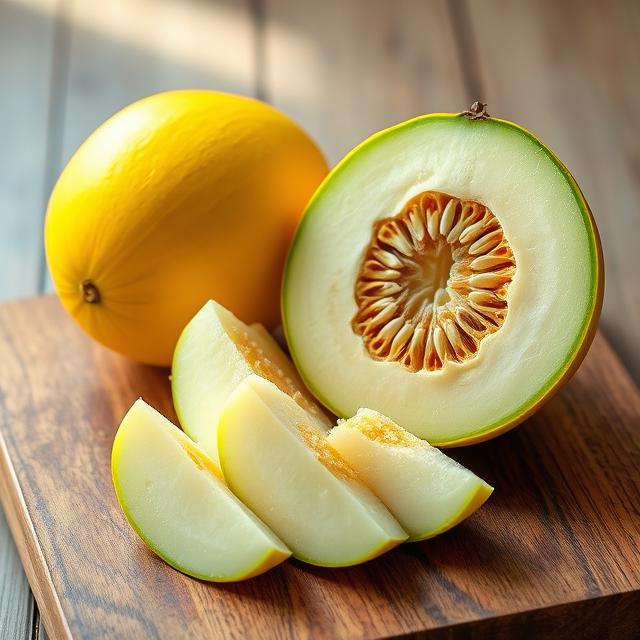
In the vibrant tapestry of summer fruits, where watermelons and cantaloupes often steal the spotlight, there exists a quieter, yet brilliantly distinctive contender: the Canary Melon. With its dazzling yellow skin and surprisingly succulent flesh, this melon is a true hidden gem waiting to be discovered by fruit enthusiasts. Its name, evoking the bright yellow of a canary bird, is a perfect descriptor for its eye-catching appearance. But beyond its sunny exterior lies a complex flavor profile that is both subtly sweet and refreshingly light. This article delves into the world of the Canary Melon, exploring its characteristics, how to select the perfect one, and the many ways you can enjoy this unique fruit.
Table of Contents
What Exactly is a Canary Melon?
Scientifically known as Cucumis melo (Inodorus Group), the Canary Melon is a member of the gourd family, Cucurbitaceae. This places it in the same species as other winter melons like the honeydew and casaba, with which it shares some similarities. Unlike cantaloupes, which are part of the Reticulatus group and have a netted rind, Canary Melons are known for their smooth, hard rind.
The melon is typically large and oblong, similar in shape to a large American football. Its most striking feature is its rind, which is a vibrant, solid lemon-yellow when fully ripe. Sometimes, you may find slight greenish or white veining, but a uniform yellow color is the key indicator of peak ripeness. The flesh inside is a pale, creamy greenish-white, offering a beautiful contrast to its bright shell. At its center, it has a seed cavity filled with flat, off-white seeds that can be saved and roasted, much like pumpkin seeds.
A Taste of Sunshine: Flavor and Texture Profile
The flavor of a perfectly ripe Canary Melon is a delightful experience. It is distinctly sweet, but not in an overpowering way like some very ripe cantaloupes can be. The sweetness is often compared to a subtle blend of a ripe pear and a honeydew melon, with a faint, almost tropical tang. Its aroma is very mild, which is a hallmark of the Inodorus (meaning “without scent”) group.
The texture is where the Canary Melon truly stands out. When ripe, the flesh is exceptionally juicy and crisp, similar to a firm pear. It’s not soft or mushy like an overripe cantaloupe can be. This firm yet succulent texture makes it incredibly refreshing, especially on a hot day. The high water content makes it not only a tasty treat but also a hydrating one.
A Journey Through History and Origin
The exact origins of the Canary Melon are a bit murky, but it is widely believed to have originated in Persia (modern-day Iran), an area known as a primary center for the domestication of many melon varieties. From there, it is thought to have spread along trade routes to Africa and Europe. The melon gets its name from the Canary Islands, where it was cultivated extensively and from where it was historically exported. Today, it is grown in various warm climates around the world, with significant cultivation in the Southwestern United States, particularly in Arizona and California, where the long, hot growing season allows it to develop its signature sweetness.
How to Select the Perfect Canary Melon
Choosing a ripe Canary Melon is straightforward once you know what to look for. Unlike some fruits that rely heavily on smell, the Canary Melon’s mild aroma means you need to use your eyes and hands.
- Color is Key: The most important indicator is the color of the rind. Look for a consistent, bright yellow hue. Avoid melons that have large areas of green or white, as this signifies under-ripeness. Conversely, a rind with extensive brown spots or a dull appearance may be overripe.
- Check the Texture: The rind should be smooth and firm but have a very slight give when you press gently on the ends. If it feels rock hard, it’s not ready. If it feels soft or mushy anywhere, it’s past its prime.
- Give it a Tap: A trick often used with watermelons also applies here. Gently tap the melon with your knuckles. A ripe Canary Melon will produce a deep, hollow sound. An underripe one will sound solid.
- Feel the Weight: A ripe melon will feel heavy for its size, indicating a high water content and juicy interior.
Storing and Preparing Your Melon
An uncut Canary Melon can be stored at room temperature for several days. Once you have determined it is ripe, you can refrigerate it to slow down the ripening process and keep it fresh for longer. After cutting, you must store the melon in the refrigerator. Wrap the cut surface tightly with plastic wrap or place the pieces in an airtight container. It should keep well for 3-5 days.
Preparing a Canary Melon is simple:
- Wash the rind thoroughly under running water to remove any surface dirt or bacteria.
- Place the melon on a stable cutting board and slice it in half lengthwise.
- Use a spoon to scoop out the seeds from the central cavity.
- From here, you can slice it into wedges (like a cantaloupe), or use a melon baller to create beautiful, bite-sized spheres. The firm skin also makes it easy to peel with a sharp knife and then cube the flesh for fruit salads or skewers.
Culinary Uses: Beyond Simple Slices
The Canary Melon’s mild sweetness and crisp texture make it incredibly versatile in the kitchen.
- The Simplest Enjoyment: Of course, it is perfect eaten fresh on its own. Chilled slices are a quintessential summer refreshment.
- Elevated Salads: Cubed Canary Melon adds a juicy, sweet element to both fruit and green salads. It pairs wonderfully with salty cheeses like feta or halloumi, fresh mint, basil, and a drizzle of balsamic glaze. Try it in a salad with arugula, prosciutto, and a light lemon vinaigrette.
- Refreshing Beverages: Blend the flesh with a squeeze of lime and some ice to create a hydrating and delicious agua fresca. You can also add it to smoothies for a natural sweetness.
- Chilled Soups: A classic Spanish sopa fría can be made with Canary Melon. Blend it with cucumber, a touch of garlic, yogurt, and herbs for a sophisticated cold soup.
- Salsas and Appetizers: Dice the melon finely and combine with red onion, jalapeño, cilantro, and lime juice for a unique salsa that pairs excellently with grilled fish or chicken.
- Frozen Treats: Puree the melon and churn it in an ice cream maker for a light, dairy-free sorbet.
Nutritional Benefits: A Healthy Choice
Like most melons, the Canary Melon is a nutrient-dense, low-calorie food. It is an excellent source of hydration due to its high water content. It is also rich in:
- Vitamin C: Essential for a healthy immune system and skin health.
- Vitamin A: Important for vision, immune function, and cell growth.
- Potassium: A vital mineral for maintaining healthy blood pressure and nerve function.
- Dietary Fiber: Aids in digestion and promotes a feeling of fullness.
It is naturally fat-free and low in sodium, making it a heart-healthy snack.
Frequently Asked Questions (FAQs)
Q1: Is a Canary Melon the same as a Korean Melon?
A: No, they are different varieties. While both are yellow, a Korean Melon is much smaller (about the size of a large apple), has a distinct white striping on its rind, and its flesh is crisper and less sweet, often compared to a cross between a pear and a cucumber.
Q2: Can I eat the seeds of a Canary Melon?
A: Yes, the seeds are edible. Similar to pumpkin seeds, they can be rinsed, dried, seasoned with salt or spices, and roasted for a nutritious and crunchy snack.
Q3: My Canary Melon is yellow but tastes bland. What happened?
A: This usually means the melon was picked too early and did not have enough time on the vine to develop its sugars. The color might have changed post-harvest, but the sugar content had already been determined. Always try to use the weight and slight give tests in addition to color when selecting one.
Q4: How does the taste compare to a cantaloupe or honeydew?
A: A Canary Melon is generally sweeter and juicier than a honeydew but less musky and aromatic than a cantaloupe. Its texture is firmer and crisper than both when ripe.
Q5: Are there any other names for this melon?
A: Yes, it is sometimes also called the Juan Canary melon, Spanish Melon, or Amarillo melon.
