

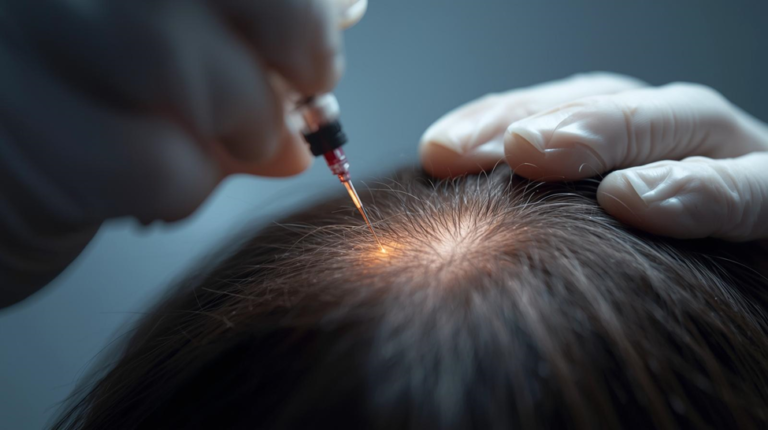
Losing hair is frustrating enough. But when you start looking into treatments, the options can feel overwhelming — lasers, supplements, transplants, and now, injections using your own blood. That last one is PRP, and it’s been generating a lot of genuine interest, not just buzz. So let’s break down what it actually involves, how it works inside the scalp, and whether it’s worth considering.
What PRP Actually Is
PRP stands for Platelet-Rich Plasma. It’s a concentration of platelets derived from your own blood. Platelets are the tiny cells your body uses to heal wounds — they carry growth factors that signal tissue repair and cell regeneration. In PRP therapy, these platelets are extracted, concentrated, and then injected directly into the scalp where hair is thinning.
The idea isn’t new. Surgeons have used PRP for decades in orthopaedics and wound care. Its application in hair loss is a more recent development, but the underlying biology is well-established.
How the Procedure Works
The process is straightforward in steps, though it does involve needles, so it’s worth knowing what to expect:
- A small amount of blood is drawn from your arm, usually around 10–20 ml
- The blood is placed in a centrifuge, which spins it at high speed to separate the platelet-rich plasma from red blood cells
- The concentrated PRP is then injected into targeted areas of the scalp using a fine needle
The whole session typically takes 45 minutes to an hour. Most people describe the injections as mildly uncomfortable rather than painful, especially after a topical numbing cream is applied. There’s no downtime — most people go back to their day immediately after.
What PRP Does for the Hair Follicle
Here’s where the science gets genuinely interesting. Hair follicles have stem cells and dermal papilla cells that control the hair growth cycle. When these cells are understimulated — due to DHT sensitivity, poor scalp circulation, or inflammation — follicles shrink over time, producing thinner and shorter hair until they stop producing hair altogether.
PRP introduces a concentrated dose of growth factors — including PDGF, VEGF, and IGF — directly into this environment. These growth factors don’t create new follicles, but they can reactivate dormant ones, extend the active growth phase (anagen), and improve blood supply to the scalp. For follicles that are weakened but not yet dead, this can make a real difference.
This is also why PRP works best at early to moderate stages of hair loss. Once a follicle has completely stopped functioning, no amount of growth factor stimulation will revive it.
What It Costs and How Many Sessions You Need
PRP is not a one-time fix. Most dermatologists recommend an initial course of three to four sessions, each spaced four to six weeks apart. After that, maintenance sessions every three to six months are usually suggested to preserve the results.
In India, a single PRP session typically costs between ₹3,000 and ₹10,000 depending on the clinic, the quality of the kit used, and the city. Premium clinics in metro cities can charge significantly more. Over a year, the total investment adds up, which is worth factoring into your decision.
The results are gradual. Most people notice reduced shedding after the second or third session, and visible improvement in thickness over three to six months. It’s not dramatic or instant — but for the right candidate, it can be meaningful.
Who Is a Good Candidate for PRP
PRP tends to work best for people with androgenetic alopecia (pattern hair loss) in its early or middle stages. It also shows promise for those dealing with diffuse thinning or telogen effluvium triggered by stress, illness, or nutritional deficiency.
It is less effective for people with advanced baldness, complete bald patches, or underlying autoimmune conditions like alopecia areata (though some research is ongoing there).
Before jumping into any procedure, it helps to understand why you’re losing hair in the first place. A proper diagnosis — looking at hormones, nutrition, scalp health, and genetics — will tell you whether PRP should be part of your plan or whether something else needs addressing first. Platforms like Traya take this root-cause approach seriously, combining clinical evaluation with personalised treatment that can work alongside or instead of procedural options depending on what’s actually driving the hair loss. You can also read more about the science behind prp treatment to make a more informed decision before your first consultation.
Final Thoughts PRP is a legitimate, well-researched option for hair loss — not a miracle cure, but a useful tool when used correctly. Its effectiveness depends on the stage of hair loss, the quality of the procedure, and whether the underlying cause is being addressed alongside it. If you’re considering it, go in with realistic expectations, ask the right questions, and make sure a diagnosis comes before a decision.
