

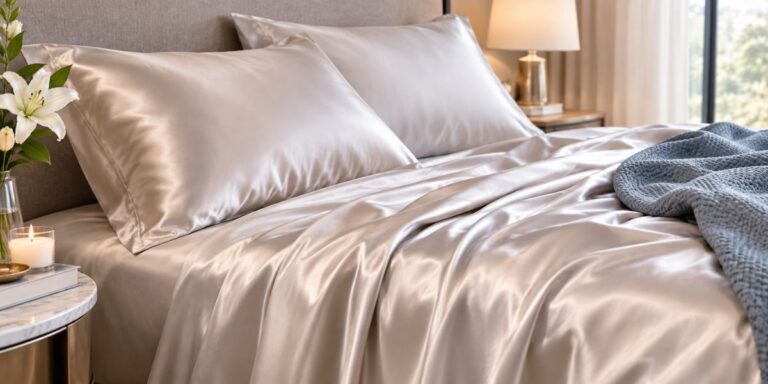
You’ve probably heard someone rave about switching to silk sheets and thought, okay, but is it actually worth it? Short answer: yes, if you get the right kind. Long answer, keep reading.
The whole appeal comes down to friction — or the lack of it. Silk barely rubs against your skin as you toss around at night, which is why people notice fewer sleep creases and less frizzy hair after a few weeks. It also does this weird trick where it keeps you cool when it’s hot and warm when it’s cold, which sounds like marketing copy but is actually just how the fiber behaves. Still, silk isn’t one thing — buy the wrong grade or weave and you’ll end up either disappointed or ripped off.
Mulberry vs. Everything Else
If there’s one thing to remember, it’s this: look for mulberry silk. It comes from silkworms that are raised in a controlled setting and fed nothing but mulberry leaves, which sounds oddly specific but it’s what makes the fiber so long and even. That evenness is the whole reason mulberry silk feels smoother and lasts longer than the alternatives.
The other common type is Tussah silk, which comes from silkworms in the wild rather than farmed ones. It’s cheaper, sure, but it’s also coarser and less consistent. You’ll see it in budget sheet sets sometimes — I’d steer clear of it as your main bedding.
Momme Weight — Basically Silk’s Thread Count
Cotton has thread count, silk has “momme” (written mm). It measures how dense the fabric is, and honestly the “best” number depends on what you want out of it, not just going as high as possible.
- 19mm — light, breathable, cheaper. Fine if you run hot or just want to test the waters before committing.
- 22mm — the one most people land on. Enough heft to feel substantial, still breathes fine.
- 25mm+ — heavy, plush, built to last, but a bit warmer at night — not great if you already sleep hot.
Weave: Charmeuse or Habotai
Charmeuse is what you’re picturing when you imagine silk sheets — shiny on top, dull underneath, with that heavy drape. Habotai is thinner and less glossy, and it’s usually where the cheaper sets end up.
Why People Actually Like It
- It genuinely regulates temperature better than cotton or microfiber.
- Less friction means fewer creases on your face and less hair damage overnight — not just a claim, it’s basic physics.
- It resists dust mites, mold, and bacteria naturally, so it’s a decent pick if allergies are part of your reasoning.
The Catch
It’s expensive. Real mulberry silk costs a lot more than your average cotton sheet set, no way around that. It’s also fussier — most sets want hand washing or a delicate cycle, not a toss-in-with-everything-else situation. And it doesn’t like sun or heat: leave it out too long and it fades, run it through a hot dryer and you can wreck the fibers for good.
Taking Care of It Without Ruining It
Cold water, under 30°C, gentle or silk cycle — or just hand wash it if you want to be safe. Use a mild, pH-neutral detergent and skip the bleach entirely, along with anything with harsh enzymes.
Don’t put it through a regular dryer cycle. Line-dry it in the shade, or if you must use a machine, keep it on no-heat/air-only and pull it out while it’s still a touch damp.
Spill something on it? Blot immediately with cool water and a little mild soap. Don’t scrub — that just pushes the stain deeper.
So What Should You Actually Buy
A few honest questions first: are you doing this for temperature control — night sweats, that kind of thing — or mostly for how it feels and what it does for your skin and hair? What’s your actual budget? And do you have a sense of whether you want it light, balanced, or heavy?
If you’re a hot sleeper on a budget, 19mm charmeuse is usually the move. Most people end up happiest around 22mm. And if you want the full luxury version and don’t mind the extra laundry effort, 25mm+ mulberry silk is worth it.
