

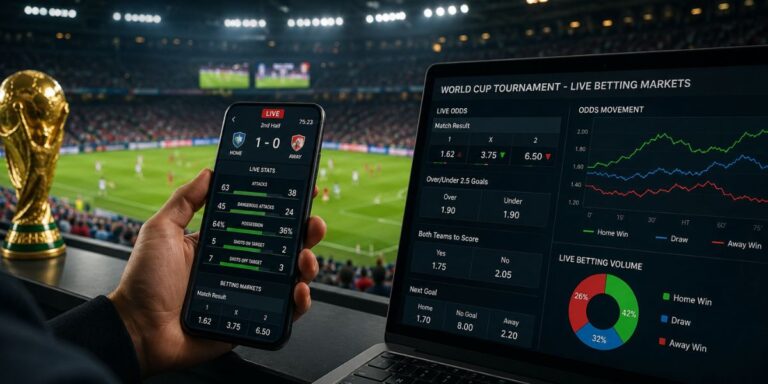
The 2026 FIFA World Cup is going to create more data than any football tournament before it. With 48 teams, 104 matches and three host countries, every game will produce a huge stream of information, from passes and sprints to pressing, set pieces and small tactical changes that used to be harder to track in real time. For fans, broadcasters and betting platforms, the match is no longer only what happens on the pitch. It is also the data moving behind it, second by second.
This tournament serves as a monumental stress test for global internet infrastructure, forcing engineers to push the boundaries of bandwidth and low-latency processing to their absolute limits. It is a defining moment that proves exactly how far our underlying tech has advanced in recent years, moving from simple static updates to a hyper-connected, real-time ecosystem where every second counts. The ability to harmonize these massive data streams into a coherent experience is the silent engine driving the modern fan experience.
The Evolution of Speed
Modern sports betting platforms have evolved into high-frequency data environments. Updates used to move more slowly, and it was not unusual for the betting screen to feel a step behind the match. That gap is much smaller now.
The tech behind live markets has to react almost as the moment happens, whether it is a sharp pass through midfield, a foul near the box or a referee’s whistle that changes the flow of the game. Sensors, cameras and live data feeds help capture those details quickly, then push them into the systems that update what fans see on screen.. This data flows through complex pipelines, allowing the system to recalculate and display fresh World Cup betting odds in milliseconds. Betway’s online betting platform is designed to handle this load, which is why it remains a reliable hub for fans who need precise data during peak tournament hours.
Speed matters a lot in soccer betting because the game rarely sits still for long. A counterattack, a corner, a card or a sudden change in possession can make old information useless almost immediately. That is why platforms need strong networking tech that can take in live data from different venues, process it quickly and push the right updates to the screen without making the experience feel delayed.
Scaling for Global Demand
Beyond the sheer speed of data transmission, the current tech trends focus on system stability. During a major event like the 2026 FIFA World Cup, the volume of users hitting these platforms at once is staggering. If the backend is not properly scaled, the user experience suffers. Engineers are now using distributed server networks to manage this traffic. By decentralizing the processing power across various regions, these platforms prevent local bottlenecks. This means that whether you are accessing the site from a mobile device or a desktop, the UI remains responsive.
Reliability and User Experience
Reliability is the primary goal for those building these systems. Online sports betting has reached the point where users notice performance straight away. Every sports bet depends on the match data, market movement and screen update staying close together. If something big happens on the field, the platform has to read it quickly, check the market and refresh what the user sees without making the page feel late. That is why developers keep adjusting the code, improving data flow and tightening response times, so the experience keeps pace with the game instead of falling behind it.
As we get deeper into the 2026 tournament, the tech behind it is going to matter even more. It is all about having a solid digital framework that works quietly and reliably, so you can just enjoy the excitement of the match.
