

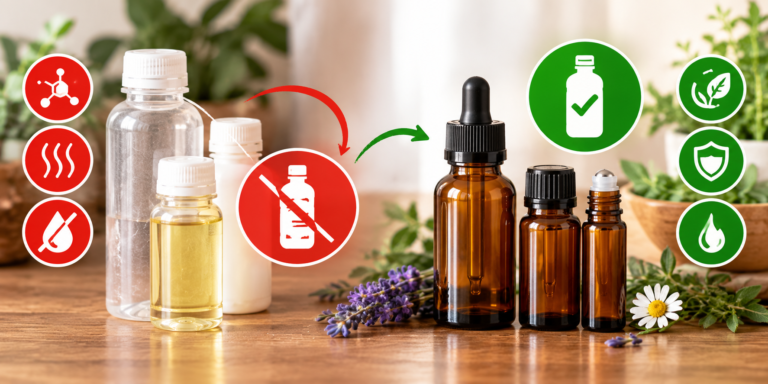
If you’ve ever bought essential oils, you’ve probably noticed they almost always come in small, dark glass bottles. That’s not a packaging trend or an aesthetic choice — it’s actually necessary. Pure essential oils are chemically intense stuff, and glass is really the only container material built to handle them properly over time.
The Oils Are More Aggressive Than People Realize
Essential oils are concentrated in a way that’s easy to underestimate. Something like the limonene in citrus oils, or the phenols found in oregano and clove, are potent enough to actually break down plastic over time — softening it, degrading it, sometimes leaching the plastic’s own chemicals right back into the oil. Glass doesn’t have that problem. It’s chemically inert, meaning it just doesn’t react with what’s inside it, so you’re not getting BPA or phthalates seeping in, and the oil stays exactly as pure as it started.
Light Is the Enemy, and Glass Blocks It
A lot of the aromatic compounds that make essential oils valuable are genuinely fragile when it comes to light exposure. That’s why you’ll almost never see essential oils in clear glass — amber, cobalt blue, and green tints all serve the same purpose, blocking out the UV light that would otherwise break those compounds down. Amber glass in particular blocks up to roughly 90% of UV rays, which is a big part of why it’s become the industry default.
It Also Keeps Air and Moisture Out
Beyond blocking light, a properly sealed glass container is non-porous and airtight, which matters more than people think. Oxygen and moisture sneaking into a container over time is a slow but steady way to degrade a product, and glass simply doesn’t let that happen the way some plastics can. The result is a noticeably longer shelf life for oils stored in glass compared to plastic.
It Fits the Philosophy, Too
There’s also a practical side benefit that happens to line up with why people use essential oils in the first place: glass is fully recyclable and reusable, and it doesn’t introduce anything artificial into the equation. For a product category that’s largely built around natural, holistic use, packaging that doesn’t compromise on that is a genuine plus, not just marketing.
Which Type of Glass Bottle for What
Not every glass bottle serves the same purpose. A few common types show up depending on what you’re actually doing with the oil:
- Dropper bottles (5-30ml) — the standard choice for pure oils or blends where you need precise, single-drop control. A reducer insert or a glass pipette keeps dosing consistent.
- Roll-on bottles — built for diluted oils meant for direct skin application, usually with a stainless steel or glass rollerball for targeted use on pulse points.
- Amber or cobalt vials — the go-to for long-term storage, since they offer the strongest light protection and help the oil hold onto its potency for as long as possible.
