

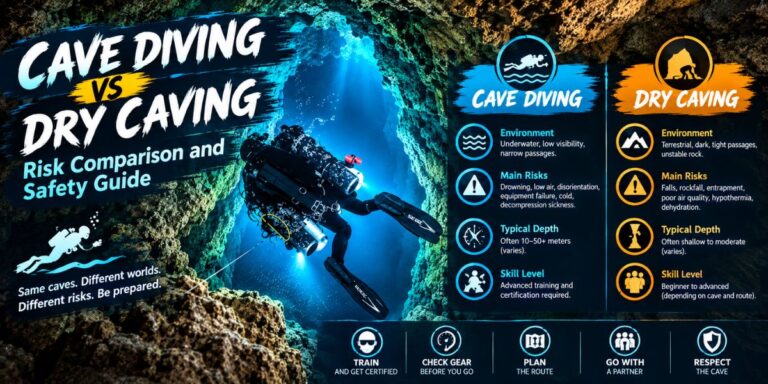
Both activities put you underground, and both can absolutely kill you if something goes wrong. But the way each one turns dangerous is completely different, and understanding that difference matters if you’re deciding which one to try, or just curious which carries the heavier risk.
What Each One Actually Involves
Cave diving is a form of scuba diving where divers explore fully submerged cave systems, often well beyond where natural light reaches. It requires specialized training, multiple tanks, strict gas-management procedures, and permanent guidelines to navigate back out. Every part of it depends on equipment working correctly and on the diver managing a strict, unforgiving air supply.
Dry caving — also called spelunking — is exploring caves on foot, through air, not water. It involves crawling, climbing, squeezing through narrow passages, and sometimes descending vertical drops with ropes. There’s no breathing apparatus involved, but the physical demands are real: fatigue, unstable footing, and psychological stress from tight, enclosed spaces are all part of the experience.
Why Cave Diving Is Generally Considered Higher Risk
The core problem with cave diving is that there’s no direct path to the surface. If something goes wrong — you run out of breathing gas, lose the guideline in zero visibility, or your equipment fails — you can’t just swim up and breathe air. You’re entirely dependent on your gear and your training to get you back out, and there’s no room for improvisation the way there sometimes is on land.
The most common fatal factor in cave diving is running out of breathing gas, often tied to poor gas planning or exceeding the standard “thirds rule” (using only a third of your air for the deepest point of penetration, saving the rest for the return). Getting disoriented after losing the guideline in silty, zero-visibility water is another major cause — a single careless fin kick can stir up sediment and reduce visibility to nothing almost instantly. Add in the risks of deeper dives — increased gas consumption, nitrogen narcosis, and decompression complications — and it’s clear why cave diving is treated as one of the more technically demanding and unforgiving activities in the diving world.
Historical fatality analysis of cave diving accidents has consistently pointed to training gaps and procedural failure — not simple bad luck — as the main driver behind most deaths. That’s actually a reassuring detail in one sense: the risk is largely manageable through proper training and discipline, but it also means the margin for error is genuinely thin.
Why Dry Caving Isn’t as Safe as It Looks
Dry caving gets underestimated because there’s no water and no breathing equipment involved, which makes it feel inherently safer. That perception isn’t entirely wrong, but it’s incomplete. Dry caving comes with its own serious hazards: slippery, uneven rock surfaces, narrow passages that demand crawling or squeezing through tight gaps, and vertical drops requiring ropes and climbing skill. Movement is physically demanding in a way that scuba diving isn’t, since there’s no buoyancy supporting your body — everything is done under your own physical effort, and fatigue becomes a real factor over a long trip.
Data on caving incidents backs this up in an interesting way: being unable to exit a cave (getting stranded or lost) and falls account for the large majority of traumatic injuries in recorded caving accidents. UK caving statistics are telling here — when cave diving incidents are excluded, general dry caving has a strong safety record, with large numbers of instructor-led trips through popular cave systems recording zero fatalities in some tracked years. Most dry caving deaths that do occur trace back to drowning from unexpected flooding, falls from height, or rockfalls — serious, but generally more survivable and preventable through basic precautions than what cave diving demands.
Comparing the Numbers
Overall fatality tracking suggests a clear split: caving-related deaths that specifically involve underwater diving components make up a disproportionate share of caving fatalities, even though cave divers represent a small fraction of everyone who explores caves. Long-term U.S. caving incident data shows an overall caving fatality rate of roughly 6% among documented rescue incidents, averaging a few deaths per year nationally — while cave diving, despite far fewer total participants, has historically produced a steady stream of fatalities concentrated among divers who exceeded their training, went too deep, or mismanaged their gas supply.
So Which One Is Actually Riskier?
Generally, yes — cave diving carries meaningfully higher technical risk. The core reason comes down to one thing: complete dependence on equipment with no direct access to the surface if something fails. Dry caving is genuinely dangerous too, and shouldn’t be treated casually, but it tends to wear you down gradually — through fatigue, disorientation, or a fall — rather than putting a hard clock on your survival the way running out of air underwater does. When something goes wrong in dry caving, you generally have more options and more time to work through them than you do underwater in an overhead environment.
The Bottom Line
Neither activity forgives poor planning, and both deserve real respect rather than casual treatment. Cave diving demands rigorous, specialized training precisely because the consequences of a mistake escalate so quickly and with so little room for recovery. Dry caving is more forgiving in terms of time and options when things go wrong, but physical fatigue, disorientation, and unstable terrain are still genuine threats that have caused real fatalities over the years. Whichever one you’re drawn to, the same underlying rule applies: know your limits, prepare your equipment properly, and always have a clear plan for what to do if something goes sideways.
