

In the first, you only visit the vet when there’s a problem. Your dog limps, your cat stops eating, your rabbit has diarrhea. You arrive worried, in a rush for a solution, and concerned about treatment costs. Everything feels urgent.
In the second scenario, you schedule regular wellness-focused checkups. There’s no emergency. There’s time to talk, ask questions, and calmly review your pet’s daily life. Small warning signs are detected before they turn into serious issues. The emotional and financial difference between these two situations is often huge.
However, there’s a natural tension. On one hand, you want to prevent problems. On the other, you think about cost, time, travel stress, and whether your pet will feel anxious. Maybe your dog gets nervous at the veterinary in Caguas. Maybe your cat hides as soon as it sees the carrier. Or you worry about being judged.
That’s why a good veterinary wellness check is designed to reduce stress—for both you and your pet. It follows clear steps, respects your pet’s pace, and is based on science-backed recommendations.
What Happens Step by Step in a Veterinary Wellness Check?
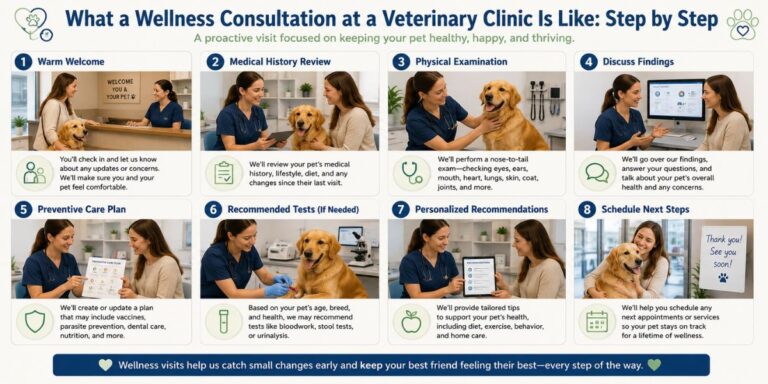
A good wellness consultation at an animal hospital or clinic usually follows a similar structure:
1. Initial Conversation with You
Before examining your pet, the veterinary team asks questions—not like an interrogation, but a conversation:
- What does your pet eat, and how often?
- How much exercise do they get?
- Where do they live (indoors, outdoors, with other animals, children)?
- Have you noticed any recent changes in behavior, sleep, appetite, or mood?
- What concerns you, even if it seems minor?
This step is essential. Many problems are detected just by listening carefully. For example, “drinking more water lately” could indicate an early disease.
2. Calm Observation of Your Pet
Before a physical exam, the vet observes how your pet walks, breathes, behaves, and interacts. A good clinic minimizes fear by using gentle handling and allowing breaks if the pet is stressed.
3. Complete Physical Exam
The vet checks your pet from head to tail:
- Weight, body condition, muscle mass
- Teeth, gums, eyes, ears, skin
- Heart, lungs, temperature
- Joints, spine, and movement
The goal is not only to rule out illness but also to detect discomfort that affects well-being, like early joint pain.
4. Emotional Well-being and Environment Review
This part focuses on often-overlooked aspects:
- Fear, anxiety, or aggression and when it occurs
- Opportunities for play, exploration, and rest
- Whether the environment suits the pet’s species and age
5. Prevention and Follow-up Plan
Finally, a plan is created together with you. It may include:
- Vaccination and deworming schedule
- Diet adjustments and weight control
- Exercise and enrichment recommendations
- Lab tests if needed
- Suggested frequency of future wellness visits
This turns the visit into a long-term care plan—not just reacting when something goes wrong.
Is It Worth Investing in Wellness Checks?
It’s natural to wonder if it’s worth paying for a visit when your pet seems fine.
- Problem-based visits: Diseases are often detected late, costs can be high and sudden, and visits are stressful.
- Wellness visits: Issues are caught early, costs are more manageable over time, stress is lower, and your pet’s daily quality of life improves.
3 Practical Tips to Make the Most of a Wellness Visit
1. Bring Written Observations
Note changes in appetite, behavior, mood, or habits before the visit.
2. Ask “Why”
Understand the reason behind every recommendation—vaccines, tests, or diet changes.
3. Agree on a Plan
Leave with a clear short- and mid-term plan, including next visits and warning signs.
Your Pet Can’t Speak, but Your Decisions Matter
You might still feel unsure or worried—and that’s completely normal. A wellness consultation isn’t about judging how you care for your pet. It’s a partnership.
You know your pet best. The veterinary team brings medical knowledge. Together, you can create a plan that not only prevents illness but also improves your pet’s happiness and quality of life.
If you can, schedule a wellness check at your trusted clinic, bring your questions, and talk about everything—physical health, emotions, and environment. Even small improvements can make a big difference.
And while your pet may not say “thank you,” you’ll see it—in how they move, play, and look at you when they feel safe and happy.
