

You might be feeling a mix of relief and anxiety right now. Relief because you finally decided to talk with a Certified Public Accountant, and anxiety because you are not quite sure what will happen in that first meeting. You might be wondering what to bring, what they will ask, or whether they will judge the mess in your financial life. White Plains business services CPA
That reaction is normal. Many people wait longer than they should to meet with a CPA, often because they are afraid of being overwhelmed or embarrassed. The truth is, a good CPA has seen almost everything. The goal of that first meeting is not to make you feel small. It is to give you clarity, calm, and a plan.
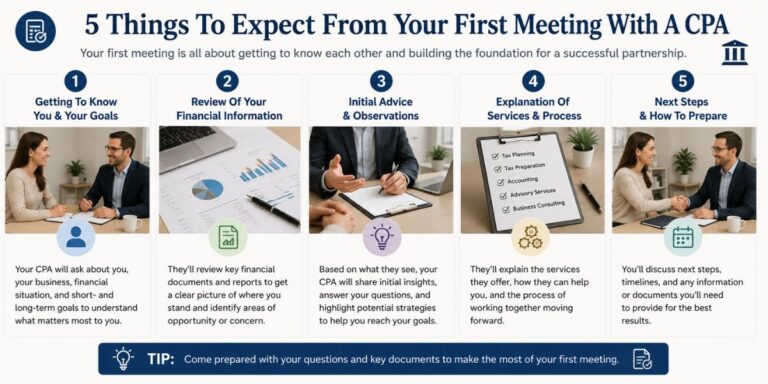
In simple terms, here is what you can expect. You will talk about your goals and worries. You will review your income, expenses, and tax history. The CPA will ask questions, explain what they see, and outline possible next steps. By the time you leave, you should feel more organized and a little lighter, even if there is still work to do.
So what are the key things to expect from your first meeting with a CPA, and how can you prepare so you walk in feeling more confident than nervous?
Why does meeting a CPA feel so stressful in the first place?
The stress often starts long before you sit in the chair. Maybe you have a stack of unopened tax letters. Maybe you filed late last year. Maybe you have a small business or a side gig, and you are not sure you have been handling things correctly. You might worry that a CPA will be shocked, or that fixing everything will be unaffordable.
On top of that, taxes and money carry a lot of emotion. There can be shame, fear, or frustration. You might think, “I should have figured this out by now,” or “I am afraid they will tell me I owe a lot of money.” Because of this tension, you might wonder if it would be easier to ignore the problem and hope it goes away.
Ignoring it almost always makes things worse. Penalties grow. Notices pile up. Opportunities for legal tax savings are missed. That is why your first meeting with a CPA is less about perfection and more about honesty. The more open you are, the more they can help.
So what actually happens in that first conversation, and how does it help turn stress into structure?
1. Expect a conversation about your story, not just your numbers
A strong first meeting does not start with forms. It starts with you. A seasoned CPA will ask about your life and your goals before they get lost in spreadsheets. Are you an employee, self-employed, or both? Do you own a home? Have kids. Support parents. Run a business. Plan to retire soon.
You might hear questions like:
“What made you reach out now?”
“What are you most worried about?”
“What would ‘peace of mind’ around your finances look like for you?”
This is not small talk. It helps the CPA understand what matters most to you so they can tailor their advice. For example, someone who is behind on filings needs a different approach than someone who is up to date but paying more tax than they should.
2. Expect a review of your documents and tax history
Once they understand your story, your CPA will usually ask to see concrete information. That might include:
• Recent tax returns, usually for the last 2 or 3 years
• Pay stubs, 1099s, W 2s, or business income reports
• Mortgage statements, property tax bills, or student loan details
• Records of major events, like selling a home, starting a business, or receiving an inheritance
If you do not have everything, be honest. A good CPA will help you make a list of what is missing and how to track it down. For guidance on what a trustworthy tax professional should ask for.
This part can feel exposing, especially if your paperwork is disorganized. Remember, the goal is not to judge you. It is to understand where you are starting so your CPA can protect you and improve your position, not guess in the dark.
3. Expect clear questions and plain language explanations
Numbers do not tell the whole story. Your CPA will ask follow-up questions. For example, if you are self-employed, they might ask how you track expenses, whether you have a separate business bank account, and how you set aside money for taxes.
Good CPAs translate tax rules into plain English. You should expect them to explain what they see in your returns, where there may be risks, and where there may be savings. If something is confusing, you have every right to say, “I do not understand. Can you say that a different way?”
If you have had a bad experience with a paid preparer before, it can help to understand your rights. The Taxpayer Advocate Service explains your protections and what to look for when choosing a tax return preparer, which can give you more confidence as you ask questions.
4. Expect a discussion of options, risks, and benefits
This is where the meeting becomes practical. After reviewing your situation, your CPA will usually outline your options. For example, if you are behind on taxes, they might explain how to file late returns, set up a payment plan, or request penalty relief. If you are current but overpaying, they might suggest better ways to structure your business or optimize deductions.
You should also expect a conversation about what happens if you do nothing. The IRS provides information about penalties for not filing or not paying on time in their topic on penalties. A good CPA will walk you through these realities calmly so you can make informed choices instead of reacting out of fear.
This part of the meeting is where you begin to see that you have options, even if none of them are perfect. That alone can reduce a lot of anxiety.
5. Expect a plan for next steps and what working together will look like
The first meeting with a CPA should end with clarity. You should walk away knowing three things. What needs to be done. Who will do it? When will it happen?
That might include filing missing returns, adjusting estimated tax payments, cleaning up bookkeeping, or planning for an upcoming life change like a home purchase or retirement. The CPA should explain their fees, what is included, and when you will hear from them next.
If something feels unclear or rushed, you can slow the conversation down. You are allowed to ask for a written summary of the plan, especially if your situation is complex. This is your money and your future. You deserve to understand what is happening.
Is a CPA worth it compared to doing everything yourself?
You might still be wondering whether you truly need a CPA or if you could manage your taxes and planning on your own. This is a fair question, especially if you are worried about costs. The answer depends on your situation, your comfort with tax rules, and how much time and stress you are willing to carry.
| Approach | When it can work | Main benefits | Main risks |
|---|---|---|---|
| DIY tax software and self management | Simple tax situations. One job, no business, few deductions. | Lower direct cost. Full control. Quick for straightforward returns. | Easy to miss credits or deductions. Higher chance of errors. Stress if you receive an IRS notice. |
| Working with a non CPA preparer | Basic returns where advice is limited. Short-term, one-time help. | May cost less than a CPA. Some guidance on forms and filing. | Training and oversight can vary widely. Less focus on long-term planning. Harder to get advanced help if issues arise. |
| Working with a CPA | Business owners, investors, multiple income sources, prior tax issues, or anyone wanting long-term planning. | Strategic advice, not just data entry. Help with audits and IRS letters. Ongoing guidance as your life changes. | Higher upfront cost. Requires you to gather documents and stay engaged in the process. |
For many people, especially those with businesses, rental properties, or complex income, the first meeting with a Certified Public Accountant is less about this year’s tax return and more about building a relationship that protects them for years to come.
Three steps you can take before your first CPA meeting
1. Gather what you have, and make a simple “missing” list
Pull together recent tax returns, income statements, bank summaries, and any IRS or state letters. Do not wait until everything is perfect. If you know something is missing, write it down. For example, “Missing 1099 from side gig” or “Need mileage log for business driving.” Bringing this list to your first CPA consultation shows that you are serious, even if your files are not yet organized.
2. Write down your top 3 concerns and top 3 goals
Before you go, take ten minutes and write three things that worry you most about your taxes or finances, and three outcomes you hope for. For example, “I am afraid I owe more than I can pay” or “I want to buy a home in two years and do not want tax surprises.” This keeps the meeting focused on what matters most to you and helps the CPA shape their advice around your real life, not just your forms.
3. Learn what you should expect from any tax professional
Spend a few minutes reviewing the IRS guidance on choosing a tax professional. Knowing the basic standards, such as signing your return, explaining entries, and being available for questions later, can help you feel more confident as you choose who to trust and as you go through your first meeting with a CPA.
Walking out of your first CPA meeting with more peace than panic
It is completely normal to walk into that first meeting with tension in your shoulders and questions racing through your mind. You might fear judgment or bad news. Yet many people walk out feeling something very different. Relief. Clarity. A sense that they are no longer facing everything alone.
You do not need to have everything “fixed” before you see a CPA. The point of that first conversation is to understand your situation, reduce the chaos, and build a path forward. Whether your finances are simple or tangled, reaching out for professional help is not a sign of failure. It is a sign that you are ready to take control.
If you are standing at that edge, unsure whether to schedule that first meeting, consider this. A year from now, you will either be in the same place or you will be glad you took the first small step toward calmer money decisions and more confident tax planning. The choice starts with you.
