

In an era dominated by synthetic materials, microplastics, and fast-paced consumerism, there is a quiet but powerful movement returning to the essentials. At the forefront of this sustainable revolution is a remarkably versatile, ancient material: wool.
When crafted into Wollmatten (the German term for wool mats), this natural fiber transcends its traditional role in winter clothing. Wollmatten represent a bridge between traditional craftsmanship, cutting-edge ecological science, and highly functional home and garden design. From therapeutic yoga spaces and premium home decor to professional-grade horticultural mulching, wool mats are proving to be one of the most versatile, sustainable, and beneficial products you can introduce to your life.
1. What Exactly is a Wollmatte?
At its core, a Wollmatte is a dense, non-woven or woven sheet of fibers harvested from sheep’s wool. Unlike traditional knitted blankets or woven carpets, many functional Wollmatten are manufactured through a process called felting or needle-punching.
- Needle-punched Wollmatten: Mechanical barbed needles repeatedly pierce layers of raw, washed wool. This process entangles the fibers at a microscopic level, creating a highly durable, dense, and uniform mat without the need for chemical adhesives or synthetic backing.
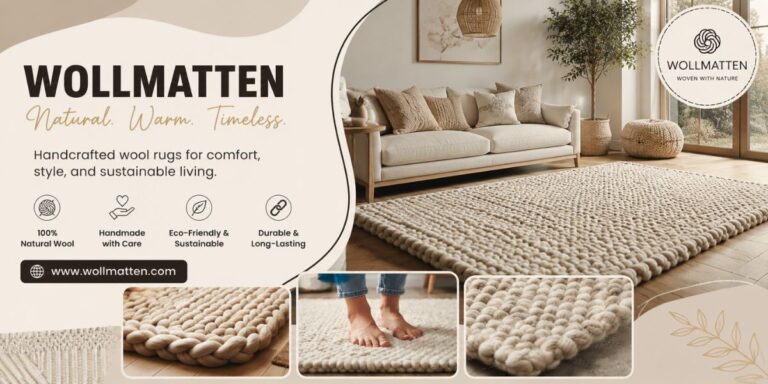
- Woven Wollmatten: These are crafted using traditional loom techniques, often featuring a heavy wool pile attached to a natural cotton or jute backing. These are highly prized for interior design and physical therapy.
Because wool is naturally rich in keratin (a structural protein) and coated in lanolin (a natural waxy substance), a finished Wollmatte inherits a suite of physical and chemical properties that no synthetic fiber can truly replicate.
2. The Science Behind the Fiber: Why Wool is Superior
To understand why a Wollmatte performs so exceptionally well across different environments, we must look at the microscopic structure of a single wool fiber.
          [ Microscopic View of a Wool Fiber ]

  ======================= Outer cuticle scales (Hydrophobic / water-repellent)
   ~~~~~~~~~~~~~~~~~~~~~ Cortex (Hydrophilic interior / absorbs vapor)
  ======================= Natural crimp (Creates insulating air pockets)
The Three-Dimensional Crimp
Wool fibers are not straight; they possess a natural, wavy structure known as a crimp. When thousands of these fibers are pressed together into a mat, the crimp creates millions of microscopic, structural air pockets. These pockets act as a highly efficient barrier, trapping still air and providing unmatched thermal insulation.
Hydrophobic Outer, Hydrophilic Inner
A wool fiber is a thermodynamic paradox. The outer layer (the cuticle) is covered in microscopic scales coated in lanolin, making it naturally hydrophobic (water-repellent). However, the inner core of the fiber (the cortex) is highly hydrophilic (water-attracting), capable of absorbing up to 30% of its own weight in water vapor without feeling damp or wet to the touch. This dual nature allows a wool mat to breathe, regulating humidity in its immediate environment.
Natural Flame Retardancy
Unlike synthetic polyester or nylon mats, which melt and catch fire easily, wool is exceptionally safe. It has a high ignition threshold (~570°C to 600°C), a high limiting oxygen index, and is self-extinguishing. If exposed to a spark, it will char rather than burst into flames, making it a highly secure choice for household flooring.
3. The Versatile Roles of Wollmatten
Wollmatten are not single-use products. Depending on their thickness, density, and treatment, they serve radically different, yet equally highly specialized, purposes.
                      ┌────────────────────────┐
                      │    WOLLMATTEN TYPES    │
                      └───────────┬────────────┘
         ┌────────────────────────┼────────────────────────┐
         ▼                        ▼                        ▼
┌─────────────────┐      ┌─────────────────┐      ┌─────────────────┐
│   Home Decor    │      │  Yoga & Fitness │      │   Horticulture  │
│  & Insulation   │      │   Therapeutic   │      │    & Garden     │
└─────────────────┘      └─────────────────┘      └─────────────────┘
Type A: Interior Design & Home Insulation
In residential spaces, Wollmatten serve as a premium alternative to synthetic rugs and high-traffic area carpets.
- Acoustic Dampening: Because of their dense, multi-layered fibrous structure, Wollmatten are incredible sound absorbers. Placing them on hardwood floors or hanging them as decorative wall tapestries drastically reduces echo and reverb in minimalist, modern homes.
- Air Purification: Wool is chemically active. It can permanently absorb and neutralize common indoor air pollutants and Volatile Organic Compounds (VOCs), such as formaldehyde, nitrogen dioxide, and sulfur dioxide, locking them deep within its protein structure.
- Thermal Comfort: Walking barefoot on a Wollmatte in the dead of winter immediately reveals its insulating power. It prevents cold drafts from rising through floorboards, saving on household heating bills.
Type B: Yoga, Meditation, and Physical Therapy
Standard fitness mats are typically made of Polyvinyl Chloride (PVC), Polyurethane (PU), or thermoplastic elastomers (TPE). These materials often off-gas chemicals, retain sweat, and feel cold or sticky. A dedicated Wollmatte designed for physical practice offers a vastly superior experience.
| Feature | Synthetic Yoga Mat (PVC/TPE) | Wool Yoga Mat (Wollmatte) |
| Material Origin | Petroleum-based plastics | 100% natural sheep’s wool |
| Tactile Sensation | Sticky, cold, or rubbery | Warm, soft, and highly cushioned |
| Moisture Control | Sweat pools on surface (slippery) | Absorbs moisture vapor, dry grip |
| Impact Joint Protection | Moderate (based on thickness) | Superior (dense natural loft distributes weight) |
| Life Cycle End | Sits in a landfill for centuries | 100% compostable and biodegradable |
For practices like Yin Yoga, Kundalini, or deep meditation where the body remains still for long periods, a wool mat keeps the practitioner’s body temperature stable, preventing chilly drafts from the floor from disrupting focus.
Type C: Horticulture, Forestry, and Gardening
While it may seem counterintuitive to put a beautiful natural material onto muddy garden soil, raw, unbleached Wollmatten are a game-changer for gardeners and commercial farmers.
- The Ultimate Natural Mulch: Placed around the base of young trees, shrubs, or vegetable beds, wool mats act as a heavy-duty weed barrier. They block sunlight from reaching weed seeds while allowing rainwater and liquid nutrients to filter slowly through.
- Water Conservation: By covering exposed soil, a Wollmatte reduces evaporation rates by up to 50%. The hydrophilic core of the wool fibers holds onto moisture and releases it back to the soil slowly, drastically reducing the frequency of watering.
- Microclimate Stabilization: In early spring, wool mats keep the soil warm, encouraging early root development. In the scorching heat of summer, they shield the delicate upper soil layers and beneficial microbes from excessive heat.
- Natural Fertilizer: As the wool mat slowly breaks down over 12 to 24 months, it biodegrades directly into the soil. It slowly releases essential plant nutrients, particularly nitrogen, potassium, and sulfur, enriching the ground naturally.
4. Unmatched Environmental and Ecological Benefits
When evaluating the true value of a product, we must look at its entire life cycle—from extraction to disposal.
[ SHEEP SHEARING ] ──> [ WASHING & NEEDLING ] ──> [ USEFUL LIFE ] ──> [ COMPOSTING ]
       ▲                                                                   │
       └─────────────────── Nutrients Return to Soil ──────────────────────┘
1. Fully Renewable Resource
Sheep grow a new fleece every single year as part of their natural cycle. Shearing is a necessary welfare practice for domestic sheep to prevent heat stress, skin infections, and mobility issues. Therefore, wool harvesting is entirely renewable and ethical when sourced from certified farms.
2. Zero Microplastics
Every time synthetic textiles or plastic mats are washed, used, or worn down, they shed microscopic plastic fibers into our municipal waterways, air, and soil. Wollmatten shed only natural keratin proteins, which pose absolutely zero risk to marine life or human health.
3. Rapid Biodegradability
At the end of its useful life—whether after five years of heavy gardening or twenty years of indoor use—a Wollmatte can be shredded and added to your compost pile. In warm, moist soil conditions, it will completely break down in a matter of months, returning valuable nitrogen and carbon back to the earth to feed the next generation of plants.
5. Comprehensive Care and Maintenance Guide
Because wool is an organic material, maintaining a Wollmatte requires a slightly different approach than caring for plastic or cotton items. However, wool is naturally resilient and requires surprisingly infrequent washing.
The Self-Cleaning Phenomenon (Lanolin & Scale Structure)
Wool is naturally dirt and odor-resistant. The microscopic scales on the fiber surface shed dry dirt easily, and the natural protein structure prevents odor-causing bacteria from taking hold. Often, simply hanging your Wollmatte outdoors on a breezy, damp day will completely refresh it. The humidity reacts with the wool fibers to release trapped odors and dust.
Step-by-Step Cleaning Process
1.Dry Debris Removal:Weekly routine.
Take the mat outdoors and shake it vigorously. For indoor Wollmatten, vacuum gently using a floor brush attachment without a rotating beater bar, which can pull and tear at the loose fibers.
2.Spot Cleaning:As needed for spills.
If a liquid is spilled, blot it immediately with a clean, dry towel. Do not rub, as rubbing pushes the liquid deep into the core fibers and can cause localized felting. Use cold water and a drop of pH-neutral wool detergent to gently dab the area.
3.Washing (Only when absolutely necessary):Seasonal care.
Hand-wash in lukewarm water (never hot, as temperatures above 30°C cause the scales to lock together, permanently shrinking the mat). Use a specialized wool wash. Submerge and gently press the water through—never wring, twist, or scrub.
4.Drying:Crucial for shape retention.
Lay the mat flat on a clean dry towel in its original shape. Gently roll up the towel to press out excess water, then unroll and let it dry flat in a shady, well-ventilated area away from direct sunlight or heaters.
6. Buying Guide: What to Look For
If you are ready to purchase a Wollmatte, consider the following key factors to ensure you are getting a high-quality, ethically produced product:
1. Certifications to Seek
- Mulesing-Free Wool: Mulesing is a controversial surgical procedure performed on some sheep. Always look for wool certified as “mulesing-free,” typically sourced from Europe, South America, or specific certified farms in New Zealand and Australia.
- OEKO-TEX Standard 100: This certifies that the final mat has been tested for harmful chemicals and dyes, making it safe for direct skin contact during yoga or for pets and children.
- kbT (Controlled Organic Livestock): This German standard guarantees that the wool comes from animals raised under strict organic farming guidelines.
2. Density and Weight
Check the density, usually measured in grams per square meter (g/m²).
- For gardening and weed control, a density of 150 g/m² to 300 g/m² is perfect.
- For a cushioned yoga or meditation practice, look for a heavier, premium weight of 400 g/m² to 800 g/m².
Summary: A Simple Choice for a Better Planet
Incorporating Wollmatten into your lifestyle is a direct vote for a cleaner, warmer, and more natural world. Whether you are laying it down in your garden to nurture organic tomatoes, rolling it out on your living room floor to find peace during a morning meditation, or using it to insulate your home from the winter cold, the humble wool mat delivers unparalleled performance.
By choosing natural wool over synthetic alternatives, you are reducing plastic waste, supporting ethical agriculture, and investing in a highly durable product that will eventually return gracefully to the soil. It is a beautiful, tactile reminder that sometimes, the best solutions are the ones that have been right in front of us for thousands of years.
