

Introduction
Olympian Motors is a New York–based electric vehicle company building a new vision for the future of automotive design and manufacturing. Unlike traditional carmakers that rely on slow, expensive, and highly standardized production systems, Olympian Motors is rethinking how vehicles are designed, engineered, and delivered.
At its core, the company aims to bring back speed, agility, and cost-efficiency to the U.S. automotive industry while introducing a more refined, minimalistic approach to luxury electric vehicles.
A New Vision for the Automotive Industry
The modern automotive industry is dominated by legacy manufacturers that often require years to bring a new vehicle from concept to production. Olympian Motors challenges this model by introducing a faster, more flexible approach that prioritizes innovation and efficiency.
The company’s vision is not only to build electric vehicles but to reshape how vehicles are created entirely—reducing complexity, improving design freedom, and enabling faster innovation cycles.
Modular Vehicle and Manufacturing Innovation
One of Olympian Motors’ core innovations is its modular vehicle and modular manufacturing system. This approach simplifies production by breaking down vehicle architecture into flexible, reusable components.
This system allows the company to:
- Reduce tooling and production costs significantly
- Simplify assembly and engineering processes
- Shorten development timelines
- Improve scalability across different vehicle models
By redesigning the production process itself, Olympian Motors aims to eliminate many of the inefficiencies that exist in traditional automotive manufacturing.
Faster Production and Reduced Development Time
Traditional automakers often require 3 to 5 years to move from design to production. Olympian Motors claims to dramatically reduce this timeline through its modular system and streamlined engineering approach.
Key improvements include:
- Up to 80% reduction in tooling and labor expenses
- Approximately 60% faster production lead times
- A shortened design-to-production cycle of around 8 months
This acceleration allows the company to respond more quickly to market trends and consumer needs while reducing overall development risk.
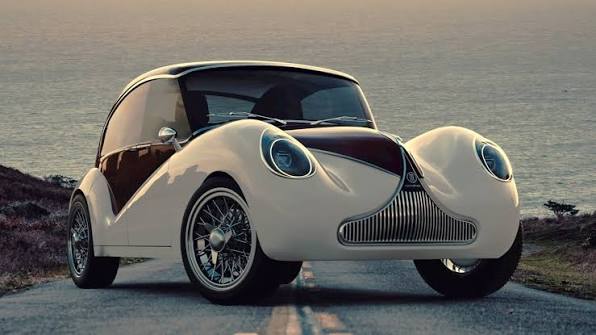
Design Philosophy: Minimalism and Natural Aesthetics
Olympian Motors takes a very different approach to vehicle design compared to mainstream automotive brands. Instead of focusing on aggressive styling and complex interiors, the company emphasizes:
- Minimalism
- Clean, modern aesthetics
- A stronger connection to nature
- Human-centered design principles
This design philosophy aims to create vehicles that feel calm, elegant, and timeless rather than overly technical or cluttered.
Materials: Steel, Wood, and a Premium Interior Experience
In contrast to many mass-market vehicles that rely heavily on plastic and synthetic materials, Olympian Motors incorporates natural and durable materials such as steel and wood.
This approach is intended to:
- Improve interior quality and tactile experience
- Reduce reliance on low-grade materials
- Create a more sustainable and premium environment
The result is a vehicle interior designed to feel more like a crafted living space than a traditional car cabin.
The Olympian Operating System (OOS)
A key part of the Olympian Motors ecosystem is its proprietary vehicle software known as the Olympian Operating System (OOS).
This system powers the in-car digital experience and is designed to be:
- Minimalistic and intuitive
- Seamlessly integrated with vehicle functions
- Focused on usability and clarity
Rather than overwhelming users with complex interfaces, OOS is built to enhance driving experience through simplicity and smart design.
Competing in the Luxury EV Market
The luxury electric vehicle market is highly competitive, with established players and emerging startups all fighting for market share. Olympian Motors positions itself differently by focusing on:
- Manufacturing innovation
- Reduced production costs
- Design-driven differentiation
- Faster product development cycles
This combination allows the company to compete not only on performance and technology but also on efficiency and production agility.
Disrupting Traditional Automotive Manufacturing
One of Olympian Motors’ boldest goals is to challenge long-standing inefficiencies in the automotive industry. Traditional manufacturing systems are often rigid, expensive, and slow to adapt.
Olympian Motors aims to disrupt this model by:
- Reducing manufacturing complexity
- Shortening supply chain dependencies
- Improving scalability through modular systems
- Lowering barriers to vehicle innovation
If successful, this approach could significantly reshape how vehicles are built in the future.
Challenges and Industry Realities
Despite its ambitious vision, Olympian Motors operates in a highly demanding industry. Electric vehicle manufacturing requires:
- Significant capital investment
- Supply chain stability
- Regulatory compliance
- Large-scale production capabilities
Competing with global automotive giants also requires sustained innovation and strong execution.
Future Outlook for Olympian Motors
Looking ahead, Olympian Motors aims to expand its production capabilities and continue refining its modular vehicle platform. The company’s long-term vision is to establish a new standard for electric vehicle design and manufacturing.
If its approach proves scalable, Olympian Motors could play a role in reshaping how luxury electric vehicles are designed, built, and experienced.
Conclusion
Olympian Motors represents a bold attempt to rethink the fundamentals of automotive manufacturing. By combining modular engineering, minimalist design, and faster production cycles, the company is challenging traditional industry norms.
Whether it becomes a major disruptor or influences the industry in smaller ways, Olympian Motors highlights a clear trend: the future of electric vehicles will be defined not just by technology, but by how efficiently and creatively they are built.
Read More: RAD Intel on Wefunder: How AI-Powered Marketing Technology Is Transforming Brand Communication.
