

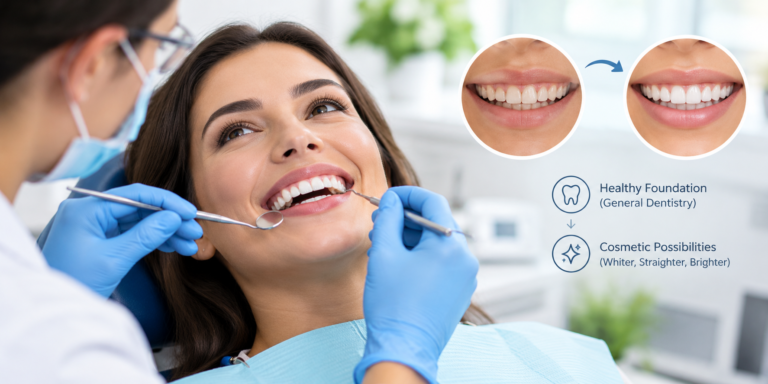
You may be thinking about whitening, veneers, or a straighter smile, but the part that keeps getting overlooked is often the part that matters most. If your teeth or gums are not healthy first, cosmetic work can turn into a short lived fix, more expense, and more frustration. That is where general dentistry comes in, especially when working with a dentist in Hanover Park. It handles the foundation, catches problems early, and gives cosmetic treatments a real chance to last.
Many people start with appearance because that is what they see every day. A stain, a chip, uneven spacing, or old dental work can wear on you. At the same time, you may also be dealing with bleeding gums, sensitivity, clenching, or a tooth that has not felt quite right for months. Those issues are not separate from cosmetic goals. They are often the reason a dentist recommends starting with exams, cleanings, X-rays, gum care, or fillings before moving into smile improvements. General dentistry as the first step to cosmetic dentistry is not a delay. It is what protects your time, money, and results.
General Dentistry Builds the Base for Cosmetic Dentistry
Cosmetic treatments improve the look of your smile. General dental care makes sure the teeth, gums, and bite can support that work. If decay is hiding under an old filling, if gum disease is starting, or if enamel is already weak, cosmetic treatment placed on top of those problems will not solve them. It can even make them harder to spot until they become bigger and more expensive.
A simple example helps. If you want veneers but have untreated gum inflammation, the gumline may shift after treatment, changing how those veneers look. If you want whitening but have cavities or exposed roots, the process may lead to sharp sensitivity. If you want bonding on a chipped tooth but the chip happened because your bite is off, the bonding may keep breaking. In each case, the cosmetic concern is real, but the underlying issue decides whether the result holds up.
This is why many treatment plans begin with preventive and restorative care. Cleanings remove buildup that can hide the true shade of your teeth. Exams and X-rays reveal problems you cannot see at home. Fillings, crowns, and gum treatment restore structure and health. According to the CDC’s oral health overview, oral health affects eating, speaking, and overall well being, which makes basic dental care far more than a routine box to check.
Untreated Oral Health Problems Can Undercut Smile Enhancements
You can usually feel when something is off, even if you cannot name it. Your gums bleed when you floss. One side of your mouth does more chewing. Cold drinks sting. You avoid smiling wide because one tooth looks darker than the rest. It is easy to separate those concerns into health issues on one side and cosmetic issues on the other, but your mouth does not work that way.
Gum disease, tooth decay, worn enamel, and bite problems all shape the outcome of cosmetic work. Adults are especially prone to putting off care because life is full, pain comes and goes, and insurance may not cover everything you want done. The HRSA resource on adult oral health points out that adults often face barriers to routine dental care, even though regular visits help prevent bigger problems.
That is also why the link between routine dental care and cosmetic results matters so much. A healthy mouth responds better to whitening, supports restorations more reliably, and gives your dentist a clearer view of what changes will actually help. Cosmetic treatment is not just about making teeth prettier. It is about making choices that fit your bite, your habits, and the current condition of your teeth and gums.
General, Cosmetic, and Restorative Dentistry Often Work Together
People often think of these as separate categories, but in real treatment planning they overlap. General dentistry focuses on prevention and diagnosis. Restorative dentistry repairs damage. Cosmetic dentistry improves appearance. Most smiles need some mix of all three.
A patient may come in asking for whitening and leave with a plan that starts with a cleaning, a small filling, and a night guard because grinding has worn the front teeth. Another may want veneers but first need gum treatment and one crown replaced so the final smile looks even. This is why general dentistry and cosmetic treatments are closely connected. One prepares the mouth. The other refines the result.
| Concern | Cosmetic Goal | General or Restorative Need First | Why It Matters |
| Yellow or stained teeth | Whitening | Cleaning and exam | Removes surface buildup and checks for cavities or sensitivity risks |
| Chipped front tooth | Bonding or veneer | Bite evaluation | Prevents repeat chipping if grinding or misalignment caused the damage |
| Uneven smile line | Veneers or contouring | Gum health assessment | Inflamed or receding gums can change the final look |
| Missing tooth | Natural looking replacement | Bone, gum, and adjacent tooth evaluation | Supports long term success for bridges, dentures, or implants |
Daily Habits Shape Long Term Cosmetic Results
Even the best cosmetic treatment cannot carry the full load on its own. Your habits still matter. Brushing twice a day, flossing, cutting back on tobacco, and keeping routine visits all help protect both health and appearance. The National Institute of Dental and Craniofacial Research guidance on oral hygiene gives practical basics that support every kind of dental work, from a simple filling to a full smile makeover.
This is where many people feel discouraged. They worry they waited too long, or that they have to fix everything at once. You do not. Good dental planning is staged. The first step may be small, but it changes what comes next.
Three Practical Steps Before You Pursue Cosmetic Dentistry
Schedule a full exam and cleaning. If you want cosmetic work, start with current information. An exam, X-rays when needed, and a cleaning show what is healthy, what is not, and what should come first.
Ask what could shorten the life of cosmetic treatment. This is one of the most useful questions you can ask. Grinding, gum inflammation, dry mouth, old fillings, and bite issues all affect how long cosmetic results last.
Build a phased plan that fits your budget. You do not need to choose between doing nothing and doing everything. Many patients do best with a plan that starts with general and restorative dentistry, then moves into cosmetic care once the mouth is stable.
If you have been focusing on the mirror, that makes sense. Your smile is personal. Still, the strongest cosmetic results usually begin with the basics. Healthy gums, sound teeth, and a stable bite give every whitening treatment, veneer, crown, or bonding repair a better chance to look good and stay that way. If you are ready to improve your smile, start with the care that supports it for the long run.
