

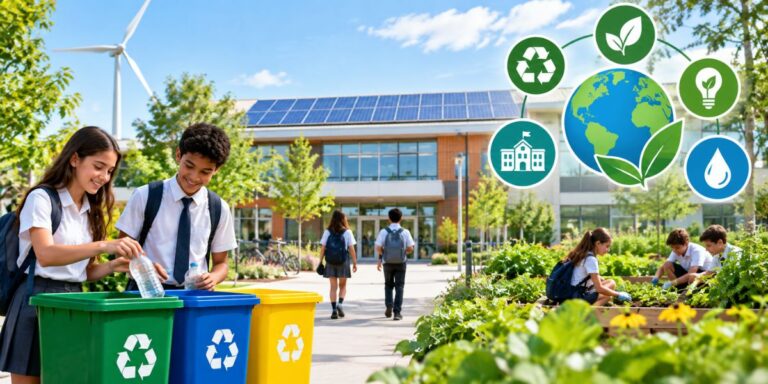
Sustainability in schools is about more than just recycling bins in the hallway. It means running a school in a way that protects the environment, saves resources, and — just as importantly — teaches students how to become responsible, environmentally-aware citizens. A truly sustainable school combines two things: how the campus itself operates, and what happens inside the classroom.
Two Sides of School Sustainability
1. Campus Operations — The “Green Building”
The physical school building and its day-to-day operations are the first place sustainability shows up.
- Energy and Water Efficiency: Schools that install solar panels, switch to LED lighting, and use smart thermostats cut both their energy bills and their environmental footprint.
- Waste Reduction: Active recycling programs and food composting help schools send far less waste to landfills.
- Healthier Learning Spaces: Choosing non-toxic building materials and improving ventilation creates cleaner, safer indoor environments for both students and staff.
2. Teaching and Learning — The Curriculum
The second, equally important side of sustainability is education itself.
- Real-World Lessons: Subjects like climate change, water conservation, and social equity are increasingly woven into everyday classes such as science and social studies, rather than being taught as a separate topic.
- Hands-On Learning: School gardens, tree-planting drives, and student-led “energy patrols” let children learn sustainability by actually practicing it.
- Global Citizenship: Students are taught to connect their everyday choices to global issues, linking classroom lessons to the United Nations Sustainable Development Goals.
Why Sustainability Matters for Schools
Schools that take sustainability seriously benefit in several ways:
- Cost savings from reduced energy and water use
- Healthier students and staff thanks to better air quality and safer materials
- Better-prepared students, who grow up understanding environmental responsibility and are more likely to carry those habits into adulthood
- Stronger community reputation, as parents and local communities increasingly value eco-conscious institutions
How Schools Can Get Started
Sustainability doesn’t have to be implemented all at once. Many schools begin with small, visible changes and grow from there:
- Start a basic recycling and composting program
- Switch to energy-efficient lighting where possible
- Introduce a school garden or outdoor learning space
- Add sustainability topics into existing science or social studies lessons
- Involve students directly through clubs, projects, or “green teams”
Conclusion
Sustainability for schools means treating the campus and the curriculum as two connected parts of the same goal: raising a generation that understands how to live responsibly on a changing planet. Whether it’s through solar panels on the roof or a lesson on climate change in the classroom, every step schools take adds up to a bigger impact — both for the environment and for the students who will inherit it.
For more articles on education, environment, and practical everyday guides, visit Buzztum.
