

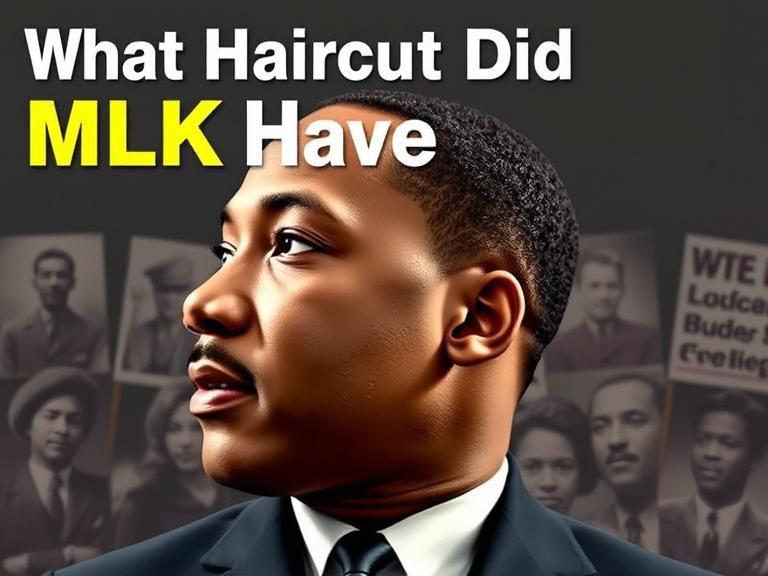
What Haircut Did MLK Have: Dr. Martin Luther King Jr.’s appearance was as carefully considered as his powerful words. His haircut, while seemingly simple, represented much more than a personal grooming choice—it was a deliberate decision that reflected the social expectations and strategic considerations of the Civil Rights Movement era.
Table of Contents
The Classic Conservative Cut
Martin Luther King Jr. maintained what barbers and style historians would classify as a conservative, professional haircut throughout his public career. This style featured short, neatly trimmed sides and back with slightly more length on top, carefully combed and parted to one side. The overall length rarely exceeded two inches at its longest point, creating a clean, polished appearance that adhered to the professional standards of the 1950s and 1960s.
This particular style was commonly known as a “businessman’s cut” or “professional cut” during that era. It was characterized by its versatility and respectability, making it the preferred choice for professionals, ministers, and public figures who needed to project authority and trustworthiness.
Strategic Appearance in the Civil Rights Era
Dr. King’s choice of haircut was not merely about personal preference—it was a calculated decision that served the broader goals of the Civil Rights Movement. During the 1950s and 1960s, African American leaders faced intense scrutiny regarding their appearance. Any deviation from conventional, conservative styling could be used to undermine their credibility or distract from their message.
The civil rights leader understood that his appearance would be dissected by both supporters and opponents. By maintaining an impeccably groomed, conservative haircut, he eliminated one potential avenue for criticism and ensured that attention remained focused on his message of equality and justice rather than his personal style choices.
The Role of Image in Leadership
Throughout history, successful leaders have understood the importance of visual presentation in conveying their message. Dr. King’s haircut complemented his overall approach to public presentation, which included well-tailored suits, polished shoes, and meticulous grooming. This attention to detail helped establish him as a serious, professional leader worthy of respect and attention.
The psychological impact of appearance cannot be understated, particularly during an era when African Americans faced pervasive stereotypes and discrimination. Dr. King’s conservative, professional appearance helped challenge prejudiced assumptions and demonstrated that the Civil Rights Movement was led by dignified, educated individuals deserving of equal treatment.
Barber Shop Culture and Community
Dr. King’s relationship with his barbers was part of a broader tradition within African American communities. Barber shops served as important social and political gathering places where men discussed current events, shared opinions, and built community connections. For a leader like Dr. King, these visits represented opportunities to connect with everyday people and stay grounded in community concerns.
The act of maintaining a regular haircut routine also demonstrated Dr. King’s commitment to presenting himself as an approachable, relatable figure rather than someone who had become disconnected from ordinary experiences. This accessibility was crucial to his effectiveness as a leader who could bridge different social and economic groups within the movement.
Evolution of the Style
While Dr. King’s haircut remained consistently conservative throughout his public career, subtle changes occurred as fashion trends evolved during the 1960s. Early photographs from the Montgomery Bus Boycott era show a slightly more rigid, formal styling, while later images reveal a somewhat softer approach that reflected the gradual relaxation of men’s grooming standards during the decade.
However, these changes were minimal compared to the dramatic shifts in hairstyle preferences that would emerge in the late 1960s and 1970s. Dr. King maintained his conservative approach even as younger activists began embracing more natural hairstyles as expressions of cultural pride and rejection of European beauty standards.
Professional Grooming Standards
The haircut Dr. King wore was consistent with professional grooming standards expected of ministers, educators, and business leaders during his era. As a Baptist minister and doctoral degree holder, he was part of a professional class that adhered to strict appearance expectations. His haircut reflected these standards while also serving his role as a public figure who needed to appeal to diverse audiences.
This professional presentation helped Dr. King gain credibility with white audiences who might otherwise dismiss civil rights leaders. By adhering to conventional grooming standards, he demonstrated that the movement included educated, professional individuals who deserved respect and serious consideration.
Cultural Context and Significance
Understanding Dr. King’s haircut requires examining the cultural context of the mid-20th century. During this period, short, neat hairstyles for men were not just fashion preferences—they were social requirements for professional success. Longer or more unconventional styles were often associated with rebellion or counterculture movements, which could undermine the respectability politics that Dr. King and other civil rights leaders employed.
The choice to maintain a conservative haircut was particularly significant given that the late 1960s saw the emergence of the “Black is Beautiful” movement, which encouraged African Americans to embrace natural hairstyles as expressions of cultural pride. While Dr. King supported this movement’s underlying message of self-acceptance, his personal styling choices remained focused on his role as a bridge-builder between different communities.
Legacy and Influence
Dr. King’s approach to personal presentation, including his haircut, influenced generations of civil rights leaders and activists. His demonstration that one could maintain cultural identity while adhering to professional standards provided a template for others navigating similar challenges in integrated environments.
The careful balance he struck between respectability and authenticity continues to inform discussions about appearance, professionalism, and identity in contemporary society. His example shows how personal choices about appearance can serve broader strategic purposes while maintaining individual dignity and integrity.
Frequently Asked Questions
Q: Did Martin Luther King Jr. ever change his hairstyle during his career? A: Dr. King maintained a consistently conservative, professional haircut throughout his public career. While there were minor variations in length and styling that reflected the gradual changes in men’s grooming trends during the 1960s, his overall approach remained conservative and professional.
Q: Who cut Martin Luther King Jr.’s hair? A: Dr. King visited various barbers throughout his career, often depending on his location during travels. He maintained relationships with trusted barbers in Atlanta, Montgomery, and other cities where he spent significant time, viewing these visits as opportunities to connect with community members.
Q: Why didn’t Dr. King adopt more natural hairstyles like other civil rights activists? A: Dr. King’s conservative haircut was a strategic choice that aligned with his approach to respectability politics and bridge-building between different communities. He believed that maintaining conventional professional appearance helped focus attention on his message rather than his personal style.
Q: How did Dr. King’s haircut compare to other civil rights leaders of his era? A: Most prominent civil rights leaders of the 1950s and early 1960s maintained similar conservative, professional hairstyles. This was part of a broader strategy to present the movement as respectable and worthy of mainstream support.
Q: Did Dr. King’s haircut influence fashion trends? A: While Dr. King’s primary influence was in civil rights rather than fashion, his professional presentation style did serve as a model for African American professionals seeking to navigate integrated environments while maintaining dignity and respectability.
