

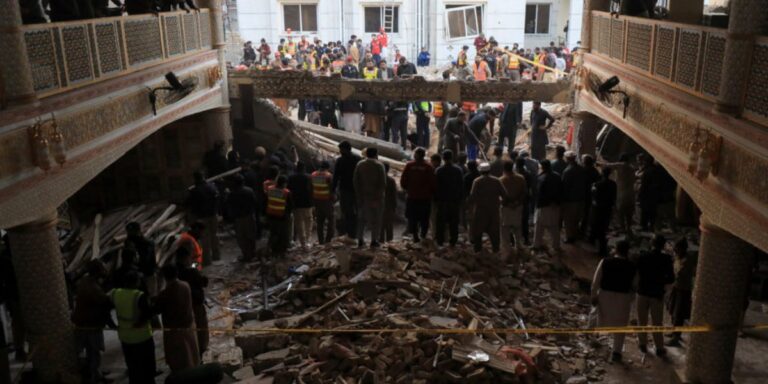
A deadly explosion at a mosque in Pakistan’s capital, Islamabad, has left at least 31 people dead and more than 160 injured, according to local officials, in one of the most serious attacks the city has seen in recent months.
The blast occurred on Friday as worshippers gathered for weekly prayers at a mosque in the Tarlai Kalan area, located on the southeastern outskirts of the capital. Authorities say the attack is suspected to be a suicide bombing, though investigations are still underway and no group has formally claimed responsibility.
What Happened
According to Islamabad’s deputy commissioner, emergency services were rushed to the scene shortly after reports of an explosion were received. Police cordoned off the area as ambulances transported the injured to nearby hospitals in both Islamabad and the neighbouring city of Rawalpindi.
A rescue official told BBC Urdu that gunfire was heard before the explosion, suggesting the incident may have involved multiple stages. Several of those taken to hospital were found to have gunshot wounds in addition to injuries caused by the blast.
Witnesses described confusion and panic in the moments following the explosion. One injured worshipper said prayers had just begun when shots were fired, followed by a powerful blast that caused parts of the mosque structure to collapse.
Official Response
Pakistan’s President Asif Ali Zardari strongly condemned the attack, calling it a “crime against humanity” and stating that innocent civilians had been deliberately targeted.
Prime Minister Shehbaz Sharif also issued a statement expressing deep sorrow and solidarity with the families of the victims. He ordered a thorough investigation and instructed security agencies to identify those responsible as quickly as possible.
An emergency was declared at major hospitals in Islamabad and Rawalpindi, with doctors placed on high alert to handle the influx of injured patients.
Security Concerns in the Capital
Islamabad has historically been considered one of Pakistan’s more secure cities, particularly compared with regions closer to the Afghan border. However, the attack has raised concerns about militant activity reaching deeper into urban centres.
The mosque is located several kilometres from Islamabad’s highly secured Red Zone, where key government institutions and foreign embassies are based. While officials say there is no immediate threat to those areas, security has been tightened across the capital.
Regional and International Reaction
Afghanistan’s Taliban-run foreign ministry issued a statement condemning the attack, describing such acts as being against Islamic and human values. It offered condolences to the families of those killed and wished a swift recovery to the wounded.
Pakistan’s defence minister claimed the attacker had travelled between Pakistan and Afghanistan, though no evidence was publicly provided. Relations between the two countries have remained tense, with Islamabad repeatedly accusing militant groups of operating from Afghan territory — a claim Kabul denies.
A Broader Pattern of Violence
The attack comes amid heightened security concerns nationwide. Pakistan experienced a sharp rise in militant violence last year, with independent analysts reporting a significant increase in combat-related deaths.
In recent months, large-scale attacks have occurred in Balochistan and other regions, while smaller but deadly incidents have continued to target religious gatherings, security forces, and public institutions.
As investigations continue, authorities warn that the death toll from Friday’s attack may rise further, as several of the injured remain in critical condition.
Reuters-Style Coverage (Concise, Fact-Driven, Neutral)
At least 31 people were killed and 169 injured in a suspected suicide attack at a mosque in Pakistan’s capital Islamabad on Friday, officials said, in an assault that authorities believe involved gunfire followed by an explosion.
The blast occurred during Friday prayers at a mosque in the Tarlai Kalan area on the southeastern edge of the city. Police said the attacker detonated explosives inside the mosque after an exchange of gunfire.
Casualties and Emergency Response
Islamabad’s deputy commissioner confirmed the casualty figures, adding that the number of dead could rise as several injured people were in critical condition.
Hospitals in Islamabad and neighbouring Rawalpindi were placed on emergency footing, with additional medical staff called in to assist with treatment.
Police sealed off the area surrounding the mosque and launched a forensic investigation. Bomb disposal units and counterterrorism officials were deployed to assess the scene.
Government Reaction
President Asif Ali Zardari condemned the attack, saying it targeted civilians and violated humanitarian values. Prime Minister Shehbaz Sharif expressed condolences to the victims’ families and ordered security agencies to carry out a full investigation.
Sharif said those responsible must be identified and brought to justice.
Security and Regional Context
Pakistan’s defence minister said the attacker had links across the border with Afghanistan, though he did not provide evidence. The Afghan Taliban government denied involvement and condemned the attack.
Relations between Islamabad and Kabul have deteriorated over the past year, with Pakistan accusing Afghan-based militants of carrying out attacks inside its territory.
Security was increased in Islamabad following the blast, particularly around government buildings and sensitive locations.
Rising Militancy
The attack comes amid a surge in militant violence in Pakistan. According to independent monitoring groups, last year recorded the highest number of militant-related deaths in more than a decade.
No group has yet claimed responsibility for the attack.
Local Pakistani Media Style (Emotive, Community-Focused, National Perspective)
Pakistan is in mourning after a devastating blast at a mosque in Islamabad claimed at least 31 precious lives and injured more than 160 worshippers during Friday prayers.
The tragic incident took place in the Tarlai Kalan area, where people had gathered peacefully for religious worship. The explosion shattered the calm of the capital, sending shockwaves across the nation.
A Day of Grief
Eyewitnesses said prayers had just begun when chaos erupted. Survivors described moments of fear and confusion as emergency sirens echoed through the area.
Rescue teams, police, and volunteers rushed to help the injured, transporting them to hospitals amid scenes of urgency and sorrow. Doctors worked continuously as emergency measures were enforced across Islamabad and Rawalpindi.
Families anxiously waited outside hospitals, hoping for news of loved ones.
National Condemnation
President Asif Ali Zardari and Prime Minister Shehbaz Sharif strongly condemned the attack, calling it an assault on humanity and Islamic values.
The prime minister assured the nation that those responsible would not escape justice and that security agencies had been directed to conduct a comprehensive investigation.
Religious scholars and community leaders also denounced the violence, stating that mosques are places of peace and worship, not targets of hatred.
Security Measures Intensified
Following the attack, security has been tightened throughout Islamabad. Checkpoints have been increased, and patrols expanded, especially near mosques and public gathering places.
Authorities urged citizens to remain vigilant while continuing daily life with unity and resilience.
A Painful Reminder
This tragic incident highlights the ongoing challenges Pakistan faces in maintaining peace and security. Despite sacrifices by security forces and law enforcement agencies, militant violence continues to claim innocent lives.
As investigations continue and the nation prays for the victims, Pakistan once again stands united against extremism, reaffirming its commitment to peace, stability, and justice.
