

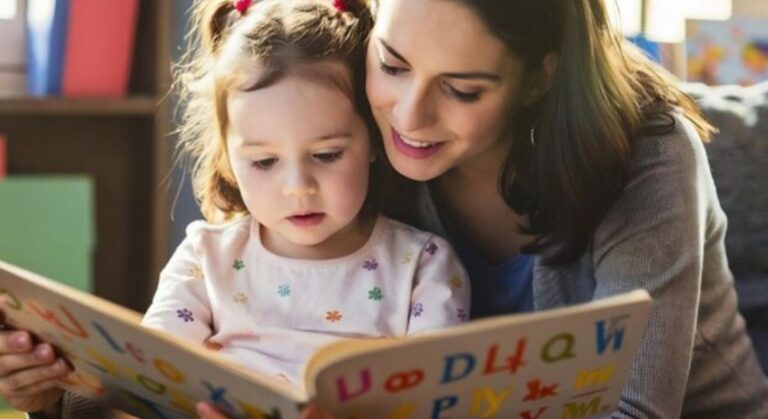
Language development plays a vital role in a child’s ability to communicate, learn, and build relationships. From a child’s first words to forming complete sentences, communication skills grow through daily interaction and experiences. Parents and caregivers play an important role in supporting this development, and simple activities at home can make a significant difference in helping children strengthen their language skills.
Talk Throughout the Day
One of the most effective ways to support language development is by talking with your child regularly. Everyday moments such as preparing meals, getting dressed, or going for a walk provide opportunities for conversation. Describe what you are doing, name objects around you, and encourage your child to respond.
For example, while cooking you might say, “I’m cutting the apples,” or “Let’s stir the soup.” These simple conversations help children learn new vocabulary and understand how language is used in everyday situations.
Read Together Often
Reading with your child is one of the most powerful ways to support communication skills. Books introduce new words, ideas, and sentence structures that help children expand their vocabulary. Reading also encourages listening, comprehension, and imagination.
Choose books with colorful pictures and simple stories, especially for younger children. As you read, ask questions such as “What do you think will happen next?” or “Can you find the dog in this picture?” These questions encourage children to think about the story and practice expressing their thoughts.
Encourage Play-Based Learning
Play is a natural way for children to explore language. Activities such as pretend play, building blocks, or playing with dolls and action figures allow children to create stories and practice communication. During playtime, join your child and model language by describing actions or asking questions.
For instance, if your child is playing with toy cars, you might say, “The red car is going fast!” or “Where is the blue car going?” This interaction helps children connect words with actions and objects.
Listen and Respond
Children feel encouraged to communicate when adults listen and respond to them. When your child speaks, give them your full attention and respond positively. Even if their words are not perfectly clear, acknowledge their effort and gently repeat the correct pronunciation.
For example, if your child says “wa-wa” for water, you might respond, “Yes, you want water.” This helps reinforce correct language while supporting their confidence in speaking.
Limit Screen Time and Promote Interaction
While educational programs and digital tools may offer some learning opportunities, face-to-face interaction is far more beneficial for language development. Conversations, storytelling, and shared activities help children practice listening and speaking in ways that screens cannot replicate.
Encouraging interactive play and communication allows children to experience language in meaningful contexts.
Seek Professional Guidance When Needed
Although children develop language skills at different rates, some may benefit from additional support. If a child has difficulty understanding or using language, professional guidance can help identify challenges and provide strategies for improvement. Services such as pediatric speech therapy in North Mayfair can offer specialized support to help children strengthen their communication abilities.
Building Strong Communication Skills
Language development is an ongoing process that grows through everyday interactions. By talking, reading, playing, and listening to your child, you can create a supportive environment that encourages communication and learning.
With patience, encouragement, and engaging activities, parents can help children build the language skills they need to express themselves, connect with others, and succeed in school and beyond.
