

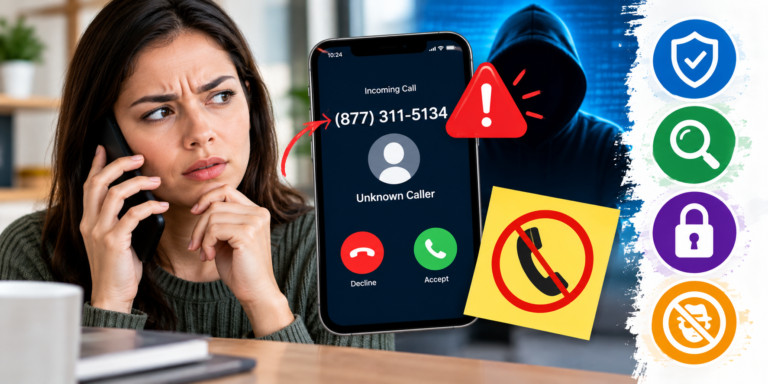
If you’ve gotten a call from 877-311-5134, you’re far from alone. This number shows up again and again in scam-report databases and consumer complaint threads, and the pattern behind it is consistent enough that it’s worth breaking down clearly — both what the callers are actually after and how to shut it down fast if it rings.
What the Callers Are Actually Doing
Reports on this number point to a few overlapping tactics, not just one script. The most commonly reported version is a fake charity or fundraising pitch — soliciting donations for causes like veterans, police, firefighters, or cancer research, where the money never actually reaches the cause it claims to support. Some of these calls even run through an automated voice system that sounds convincingly human before handing you off to a live scammer for the actual pitch.
Other reports describe a completely different angle — someone posing as a government official using a fabricated title to pressure people into “updating” their bank account information, or a caller claiming to be from Microsoft asking for a credit card number to fix some invented tech problem. Different cover stories, same underlying goal: get you talking long enough to hand over financial details.
Why It Works on People Who’d Normally Know Better
These calls are built to keep you on the line. A friendly, official-sounding voice, a cause or problem that sounds urgent and plausible, and a script designed to walk you toward “confirming” information they can then misuse. It’s not that people who get scammed are careless — it’s that the whole setup is engineered to lower your guard before you’ve had time to think it through.
What to Actually Do If This Number Calls You
The advice here isn’t complicated, and it works regardless of which version of the pitch you get:
- Don’t answer if you don’t recognize the number. Let it go to voicemail. Legitimate callers leave a message; scam operations often don’t bother, or leave something vague.
- Never confirm or hand over financial details on an unsolicited call — not your bank info, not a credit card number, not a Social Security number, no matter how official the caller sounds.
- If it’s a charity pitch, hang up and look the organization up yourself. A real charity won’t mind you calling back through their official number, and a quick check on a site like Charity Navigator will tell you whether it’s legitimate.
- Report and block the number afterward. Reporting it to the FTC or your phone carrier helps flag it for others, and blocking it stops the repeat calls that these operations tend to make.
If You Already Gave Out Information
If you already shared account details, a card number, or anything sensitive before realizing what was happening, don’t wait to act. Contact your bank or card issuer immediately to flag possible fraud and consider a card replacement, and keep an eye on your statements for anything unfamiliar in the days after. The sooner you flag it, the more options you have to limit the damage.
