

You might be staring at a pile of receipts, a messy spreadsheet, and a bank balance that never seems to match what you thought it should be. Maybe you started your business with the idea that you would “keep up with the books later,” and now later has turned into late fees, tax worries, and a nagging feeling that you are missing something important. That’s where professional bookkeeping services in Fort Worth can step in to help you regain control and peace of mind.
If you are considering hiring a bookkeeper, you are probably tired of the stress and second guessing. At the same time, trusting someone with your financial records can feel risky. You might be asking yourself whether you really need help, whether you can afford it, and how to know if you are choosing the right person.
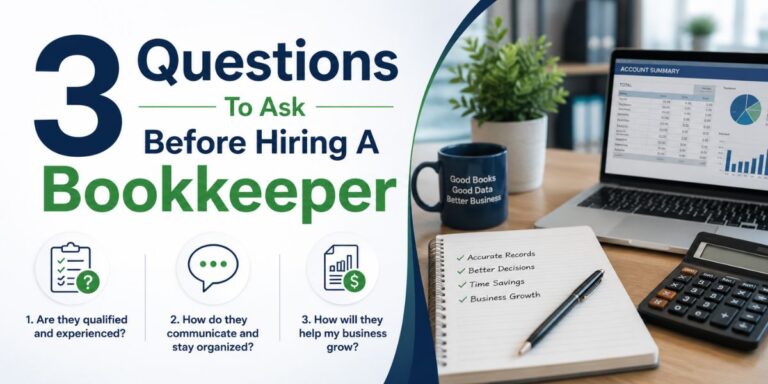
That is where a few simple but powerful questions can make all the difference. This guide walks through 3 questions to ask before hiring a bookkeeper, why they matter, and how the answers can protect you, your cash flow, and your peace of mind. In short, you will see what to look for, what to avoid, and how to move from chaos to clarity with confidence.
Why hiring a bookkeeper feels so risky when money is already tight
On paper, the decision seems simple. You are overwhelmed. Your records are behind. A bookkeeper can clean it all up. In reality, the decision carries emotional and financial weight.
The problem often starts small. A few late nights entering expenses. A bank reconciliation that never quite balances. You promise yourself you will fix it on the weekend. Then tax season approaches, your accountant asks for reports you cannot easily produce, and you feel that mix of embarrassment and anxiety that only money problems seem to trigger.
Because of this tension, you might wonder if hiring a bookkeeper will really solve the problem or just add another cost. You might also worry about handing over login credentials and sensitive details to a stranger. What if they make mistakes. What if they disappear. What if the IRS comes calling and your records are not in order.
The truth is that a good bookkeeper can be a quiet anchor for your business. A poor one can create more confusion than you already have. So, where does that leave you.
It leaves you needing clarity. You do not have to become an accounting expert, but you do need a simple way to sort the professionals from the pretenders. That is where asking the right questions before you hire anyone becomes your best protection.
Question 1: “How will you keep my records accurate and audit ready?”
This first question goes beyond “Are you good with numbers.” You want to know how the bookkeeper thinks about accuracy, documentation, and compliance. In other words, whether they will help you sleep at night if the IRS ever reviews your records.
You can start by asking them to walk you through their process for recording transactions. A serious bookkeeper will describe a clear routine. How often they reconcile bank and credit card accounts. How they handle receipts. How they track income and expenses in a way that aligns with tax categories.
To understand what “good” looks like, it helps to know the basics of what the IRS expects. The IRS provides guidance on how to record business transactions properly. A competent bookkeeper should be comfortable working within that framework and explaining it in plain language.
You might ask follow up questions like:
- How often will you reconcile my accounts.
- What reports will I get each month, and what will they tell me.
- How do you document and store supporting records like invoices and receipts.
If the answers feel vague, rushed, or full of jargon you do not understand, that is a red flag. The right bookkeeper will not make you feel small or confused. They will help you see how clean books protect you and support better decisions.
Question 2: “What experience do you have with businesses like mine?”
Not every business is the same. A contractor, an online shop, a consultant, and a restaurant all have different rhythms and recordkeeping needs. When you ask about experience, you are not just hunting for years in the profession. You are looking for experience that matches your world.
So you might ask.
- Have you worked with businesses in my industry or similar size.
- What accounting software do you use most often.
- Can you share examples of how you helped a client clean up messy books or get caught up.
This is where you get a sense of how they think. Do they understand common pain points in your type of business. For example, if you run a small service business, they should be familiar with tracking billable time, managing deposits, and separating personal from business expenses. If you sell products, they should be able to speak to inventory and cost of goods sold.
It is worth remembering that even though a bookkeeper is not a tax preparer, their work feeds directly into your tax returns. The IRS offers guidance on choosing a tax professional as a small business. Some of the same principles apply when choosing a bookkeeper. You want someone who understands your type of business and who can support clean, accurate numbers for tax time.
If their experience is mostly with large corporations and you are a solo owner, or vice versa, there may be a gap in expectations. That does not mean they are unqualified. It does mean you should ask how they adapt their approach to match your size and needs.
Question 3: “How do you protect my data and work with my tax professional?”
This question gets to two important issues. Security and collaboration. Both matter more than most people realize.
First, security. Your bookkeeper will likely have access to sensitive information. Bank feeds, credit cards, payroll records, and sometimes even full login access. You should feel comfortable asking exactly how they protect that information.
Consider asking.
- How do you share documents and passwords.
- Do you use secure portals or encrypted tools.
- What happens if our relationship ends. How do I get my data back.
Second, collaboration. Unless your bookkeeper also prepares your tax returns, you will probably have both a bookkeeper and a tax professional in your world. The IRS shares tips for choosing a tax professional you can trust. Once you have one, your bookkeeper should be willing and able to coordinate with them.
You might ask.
- Are you willing to communicate directly with my CPA or tax preparer.
- How do you prepare year end reports so tax filing is smooth and accurate.
A strong answer shows that the bookkeeper sees themselves as part of a team supporting your business, not as a lone operator who disappears once the books are “done.”
DIY bookkeeping vs hiring a professional: what is really at stake
Before you make a decision, it can help to compare doing your own books with working with a professional. Many business owners underestimate the real cost of trying to handle everything themselves.
| Factor | DIY Bookkeeping | Hiring a Bookkeeper |
|---|---|---|
| Time required each month | 5 to 15 hours, often at night or on weekends | 1 to 2 hours reviewing reports, most data entry handled for you |
| Error risk | Higher, especially with tax categories and reconciliations | Lower, if the bookkeeper is trained and uses clear processes |
| Stress level | Persistent worry about “what I might be missing” | More peace of mind if you trust the professional and the reports |
| Tax preparation | Often more time with your tax preparer, higher fees to clean up records | Smoother filing, cleaner data, possible savings on tax prep fees |
| Decision making | Harder to see true profit, cash flow, or trends | Regular reports that show where money is coming from and going |
| Control | Direct control, but also full responsibility for mistakes | Shared responsibility, with oversight through regular reviews |
Looking at this comparison, you may realize that the real question is not “Can I afford a bookkeeper.” The deeper question is whether you can afford ongoing confusion and the hidden costs of guesswork.
Three concrete steps you can take before you hire anyone
Once you understand what to ask, the next move is to act on it. Here are three practical steps you can take right away to move toward a better small business bookkeeping setup.
1. List your non negotiables
Before you talk to any bookkeeper, write down what matters most to you. For example.
- How often you want updates or reports.
- Which software you prefer or are willing to use.
- Your comfort level with sharing bank access and logins.
- Your budget range and whether you prefer flat fees or hourly billing.
This short list becomes your compass. It helps you stay grounded during conversations so you are not swayed by personality alone.
2. Interview at least two or three bookkeepers
Even if the first person seems fine, talk to more than one. Use the three questions from above as your guide. Ask how they keep records accurate, what experience they have with your type of business, and how they protect data and work with tax professionals.
Notice how you feel in the conversation. Do they rush. Do they listen. Do they explain things in clear language. You are not just hiring a skill. You are choosing someone you will share sensitive information with over time.
3. Start with a clear trial period
When you choose someone, set expectations from the beginning. For example, agree on a 3 month trial. Define what “success” looks like. Perhaps that means your accounts are reconciled monthly, you receive timely financial reports, and your questions are answered within a certain timeframe.
A time bound trial protects both of you. It gives the bookkeeper a chance to show how they work and gives you a natural point to review whether the relationship is working.
Bringing it all together so you can move forward with confidence
You do not need to become an accountant to choose the right support. You simply need to slow down, ask thoughtful questions, and pay attention to the answers. When you ask about accuracy, relevant experience, and security, you turn a vague decision into a clear evaluation.
Whether you are just starting to look or you are reconsidering your current support, use these questions to ask before hiring a bookkeeper as a filter. They can help you avoid costly mistakes, reduce stress, and finally get books that reflect the reality of your business.
You deserve financial records that make sense and a partner who respects both your time and your trust. Taking these steps now can give you the clarity you have been missing and free your energy to focus on the part of your work that only you can do.
