

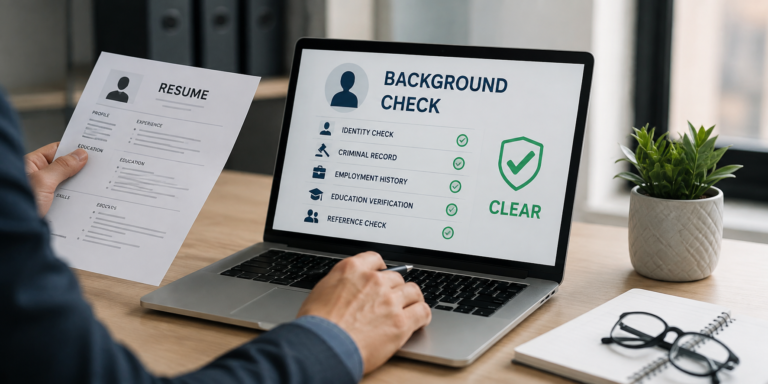
Hiring the right person is one of the most important decisions a company can make. A candidate may have an impressive résumé, strong interview skills, and the experience needed for a position, but employers often need more information before making a final hiring decision.
This is where background checks can help.
When handled properly, background checks allow employers to verify information provided by applicants and identify potential concerns before bringing someone into the organization. However, companies should also understand that background screening involves privacy, legal, and compliance responsibilities.
What Is an Employment Background Check?
Before starting the hiring process, employers should understand how employment background checks work and what information they can legally review when evaluating applicants.
An employment background check is a process used by an employer to verify certain information about a job applicant.
Depending on the position and applicable laws, a background check may include information such as:
- Employment history
- Education credentials
- Professional qualifications
- Criminal records
- Identity verification
- Driving records for relevant positions
- References
- Professional licenses
The exact information reviewed should depend on the requirements of the job. Employers should avoid collecting unnecessary personal information simply because it is available.
Why Do Companies Conduct Background Checks?
A background check can provide employers with additional information before they make a hiring decision.
For example, if a job requires an employee to operate company vehicles, checking an applicant’s driving history may be relevant. Similarly, positions involving sensitive financial information may require additional screening.
Background checks can also help employers verify whether important information on a résumé is accurate.
However, a background check should not automatically determine whether someone is suitable for employment. Employers should consider the complete application, qualifications, interview performance, references, and other relevant factors.
Get the Applicant’s Authorization First
One of the most important parts of the process is obtaining the applicant’s permission when required.
Employers should clearly explain that a background check will be conducted and provide any legally required disclosures before obtaining authorization.
The authorization process should be straightforward and understandable. Applicants should know what they are agreeing to and how their information may be used.
Companies should also keep appropriate records showing that the required authorization was obtained.
Follow Applicable Laws
Background screening is not simply an internal HR procedure. Depending on where the employer and applicant are located, different laws and regulations may apply.
In the United States, for example, employers using consumer reports for employment purposes may have obligations under the Fair Credit Reporting Act (FCRA). Employers may also need to comply with state and local requirements.
The Equal Employment Opportunity Commission (EEOC) also provides guidance regarding the use of criminal history information in employment decisions.
Because employment-screening laws can vary significantly, businesses should obtain appropriate legal advice and make sure their screening procedures comply with applicable requirements.
Choose a Reliable Screening Provider
If a company uses a third-party background-check provider, selecting a reputable service is important.
A professional provider should have processes for obtaining accurate information, protecting sensitive data, and complying with applicable regulations.
Before working with a screening company, employers should consider:
- What types of checks are available
- How information is collected and verified
- How applicant data is protected
- Whether the provider follows applicable laws
- How inaccurate information is handled
- How long information is retained
A reliable provider can make the screening process more organized while reducing unnecessary administrative work for an HR team.
Be Consistent With Applicants
Companies should apply their background-check policies consistently.
For example, if an employer requires a particular screening process for a specific position, it should generally be applied consistently to similarly situated applicants. Selectively checking some candidates while ignoring others can create unnecessary legal and fairness concerns.
A written background-check policy can help HR teams maintain consistency throughout the hiring process.
Protect Applicant Information
Background checks can involve sensitive personal information, so companies need to take data security seriously.
Access to screening reports should be limited to people who genuinely need the information for legitimate employment purposes.
Companies should also consider:
- Secure storage
- Restricted employee access
- Strong account security
- Appropriate retention periods
- Secure disposal of unnecessary records
Protecting applicant information is not only good business practice; it may also be required by applicable privacy and data-protection laws.
What If a Background Check Reveals a Problem?
Finding something concerning in a background report does not necessarily mean an applicant should immediately be rejected.
Employers should first make sure the information is accurate and relevant to the position.
If an employer plans to take adverse action based on information contained in a consumer report, additional legal requirements may apply. Under the FCRA, for example, employers generally have specific steps to follow before and after taking adverse action based on a consumer report.
This gives applicants an opportunity to identify and dispute inaccurate information.
Create a Clear Background Screening Policy
A written policy can make the process easier for everyone involved.
A company’s policy can explain:
- Which positions require background checks.
- What types of information may be reviewed.
- When authorization is obtained.
- Who can access screening information.
- How records are stored.
- How long information is retained.
- How applicants are notified about certain employment decisions.
A clear policy also helps HR professionals follow the same procedure from one applicant to another.
Final Thoughts
Authorizing background checks on applicants applying for your company’s jobs can be an important part of responsible hiring. Background screening can help employers verify information, identify potential risks, and make better-informed recruitment decisions.
At the same time, companies must respect applicants’ privacy and follow all applicable employment, consumer-reporting, and data-protection requirements.
The best approach is to create a consistent screening policy, obtain the necessary authorization, work with reliable screening providers, protect applicant information, and give applicants appropriate opportunities to address inaccurate or potentially misleading information.
