

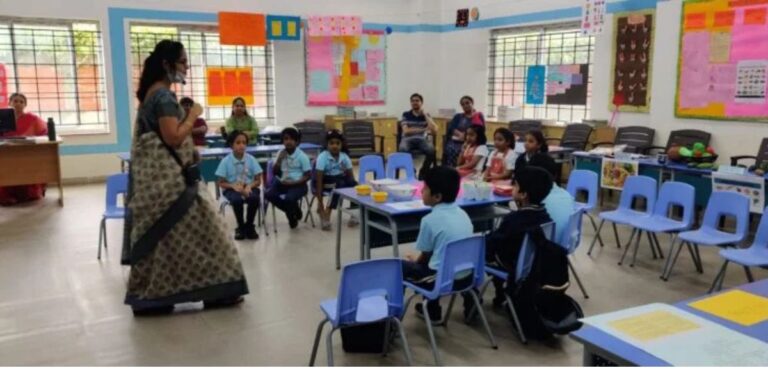
Bangalore has a strong focus on early education, and many families aim to support learning in the preschool years. When home routines, teacher-led play, and rich language interaction work together, they may strengthen attention, memory, and early reasoning. Choosing a play school in Bangalore is often influenced by these expectations for quality and consistency.
This blog explains the city factors that can support cognitive growth and how parents can use the same ideas.
What Cognitive Growth Really Means In The Preschool Years
Cognitive growth is the development of thinking skills. In preschool, this includes attention, early memory, and the ability to follow simple instructions. It also includes reasoning, such as noticing patterns, making choices, and trying again after a setback.
These skills improve when learning is active and not rushed. Emotional security matters too. When children feel safe and understood, they explore more, ask questions, and stay with tasks for longer.
Bangalore’s Education-Driven Family Culture
Many Bangalore families treat early learning as part of daily life, not a separate target. When you talk with your child, listen closely, and keep steady routines, it supports language and self-control, which also support thinking.
This education-forward mindset can also influence how families select a preschool in Bangalore, with a stronger emphasis on teacher quality, developmental appropriateness, and learning environments that support curiosity instead of rote performance.
High-Quality Preschool Infrastructure and Teaching Methods
Better early learning outcomes are often linked with settings that are safe, predictable, and thoughtfully designed for young children. In Bangalore, preschools frequently compete on learning design, which can encourage investment in trained staff, age-appropriate materials, and structured play.
When teaching methods are child-centred, children are more likely to engage actively, ask questions, and practise reasoning. Clear routines and calm transitions can also support self-regulation, which underpins memory and problem-solving. Where observation-based tracking is used carefully, it can help adults respond to children’s developmental needs without labelling or undue comparison.
Language Exposure and Multilingual Advantage
Bangalore’s everyday life often includes more than one language across home, community, and learning spaces. Supportive multilingual exposure can strengthen listening and vocabulary, because children learn to notice differences in sounds and meanings.
It may also support flexible thinking, as children practise switching between language rules. The strongest gains tend to come from real conversation, where children explain ideas and receive clear, patient responses.
The Role of Technology Used the Right Way
In Bengaluru preschools, technology is used carefully to support learning, not to increase screen time. When used with clear limits and adult guidance, it can strengthen attention, language development, and early problem-solving.
- Simple digital learning tools such as smart boards and visual stories help children learn shapes, sounds, and basic words more effectively.
- Short, guided tech activities are planned and kept brief to ensure children are not exposed to screens for long periods.
- Learning progress tools help teachers observe how children focus, remember, and respond, enabling early support if needed.
- Parent communication apps allow schools to share learning updates and simple activities that parents can continue at home.
Conclusion
Bangalore’s perceived edge in preschool cognitive growth can be attributed to a combination of education-focused routines, stronger early-learning design, richer language exposure, and thoughtful enrichment. These influences work best when they protect childhood, keep learning developmentally appropriate, and strengthen the foundations that matter most: attention, communication, self-regulation, and curiosity. When families and cities invest in these fundamentals, pre-schoolers are more likely to build the cognitive readiness that supports learning well beyond the early years.
